The Bojin Journal · Myths & real talk
How Long Until You Actually See a Difference?
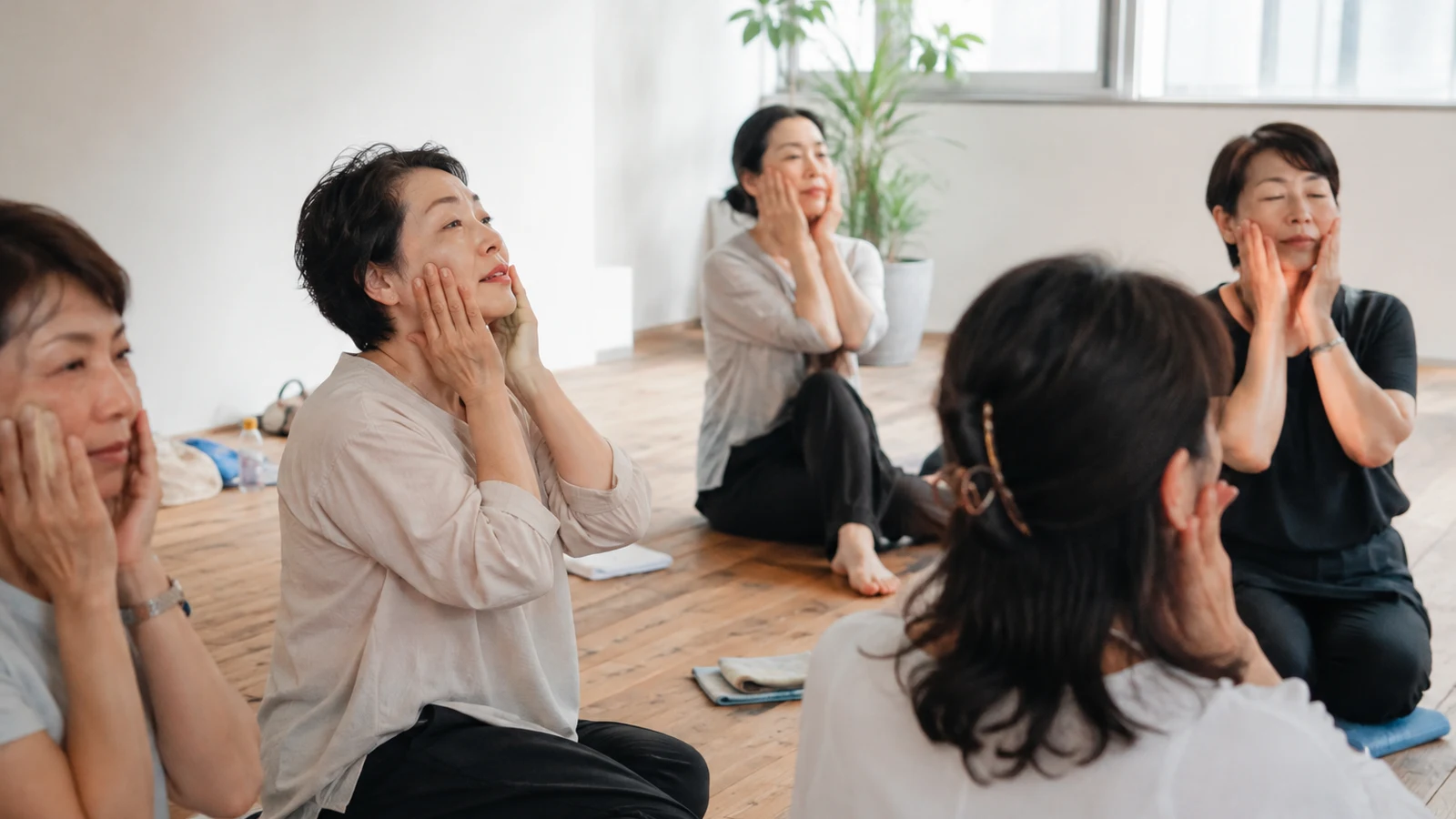
Every new student asks me the same question in her first week, and I can hear the worry underneath it: "How long until I see something?" She deserves better than "everyone's different," and better than a suspiciously tidy "seven days." So here is the answer I give in class, checkpoint by checkpoint. (If you're still deciding whether to believe any of this in the first place, start with straight talk for skeptics instead.)
Why the honest answer has four parts, not one
Skincare marketing trains you to expect one dramatic timeline: "results in one use." Then week two arrives, nothing dramatic has happened, and you quit, right past the point where something real had already started. Your face changes on several schedules at once. Fluid responds in minutes. Habit-held tension takes weeks. Once you know which change belongs to which schedule, week two stops feeling like failure.
The four checkpoints
No guarantee lives in this list; faces and habits differ. This is the pattern my consistent students report, over and over, and it holds often enough that I teach it on day one.
Minutes after a session: fluid and tension ease, and it fades by morning. Week two: your face starts holding the ease between sessions. Week six: the difference settles in and stays through an ordinary week. Nothing arrives overnight, and nothing worth having takes six months.
Minutes after a session. The worked area looks a touch less puffy and feels less tight almost right away. Tension eased, fluid moved. It also fades back by the next day in the beginning, and that fade means nothing went wrong. It means the change is still session-deep.
The next morning. After a handful of sessions, the area starts looking a little brighter on waking, not just at bedtime. Your face kept some of the ease through the night instead of handing all of it back.
Week two, around six sessions. This checkpoint tends to arrive from outside: a friend says you look rested, or the mirror catches you on an ordinary Tuesday and the area sits more settled than it used to, hours after any session. Subtle, and real.
Week six, fifteen to eighteen sessions. The change stops depending on the session. A more rested, settled look holds through a normal week, practiced or not. Expect a plateau here too: the result becomes a state you maintain, not a curve that keeps climbing.
How to reach week six
Consistency carries this timeline. Intensity adds nothing to it. Two to three gentle sessions a week, with real rest days between, gives skin and tissue the rhythm they respond to.
- Fix two or three days and keep them After the morning wash or before bed, whichever you will keep on a tired week. The rhythm matters more than the hour.
- Work the same handful of spots A new area every session resets every clock. Pick your spots and let them accumulate sessions.
- Take one photo a week, not one look a day Same light, same angle, once a week. The daily mirror hides slow change; the weekly photo shows it.
- Budget for a boring week one Most people quit in week one, a step short of the first checkpoint they would have noticed. Expect the boredom and walk through it.
- Judge at week six, not before That is the fair trial. Consistent for six weeks and nothing to show? Then question the method. Anything sooner, question the schedule.
Six weeks is short enough to try honestly and long enough to know for sure. Start the clock this week, and let week one be as boring as it needs to be.
Quick answers
What if I don't notice anything after two weeks?
Check two things before you blame the method. Are you at two to three sessions a week, or did the habit slip? And are you on the exact tight spot, or somewhere near it? Nine stalls out of ten trace back to one of those. If both check out through week six with nothing to show, then it is fair to ask whether this method fits what your face is carrying.
Will results keep improving forever if I keep going?
No. Around week six to eight the change settles into a steady state: a face that looks more rested on an ordinary week, held there by the habit. It stops being dramatic and starts being normal. Distrust any routine that promises endless improvement; bodies plateau, and that plateau is the result.
Does the timeline change with age?
The after-session changes show up at any age, since fluid and tension respond within minutes. The week-six settling can arrive later on mature skin, which holds less elasticity to begin with. Consistency moves the timeline more than your birth year does.
Can I speed this up by practicing every day?
No, and daily practice can push the other way. Skin and tissue respond during the rest days, and two to three sessions a week protects those. Practicing daily compresses nothing; it just takes away the recovery the timeline is built on.
Start week one the right way
The first session sets the pace for the five weeks after it. My free 3-minute video walks you through a proper one, order, angle, and pressure, so week one counts toward week six instead of warming up for it.
Watch the free 3-min videoYu-Ting Lan is a Taiwan-based international bojin instructor and the founder of Héhé Studio. She has taught her bojin method to more than a thousand students, from complete beginners to grandmothers, across Taiwan, Hong Kong, and Malaysia.