The Bojin Journal · Cheeks & Smile Lines
Why One Side of Your Face Looks Different From the Other
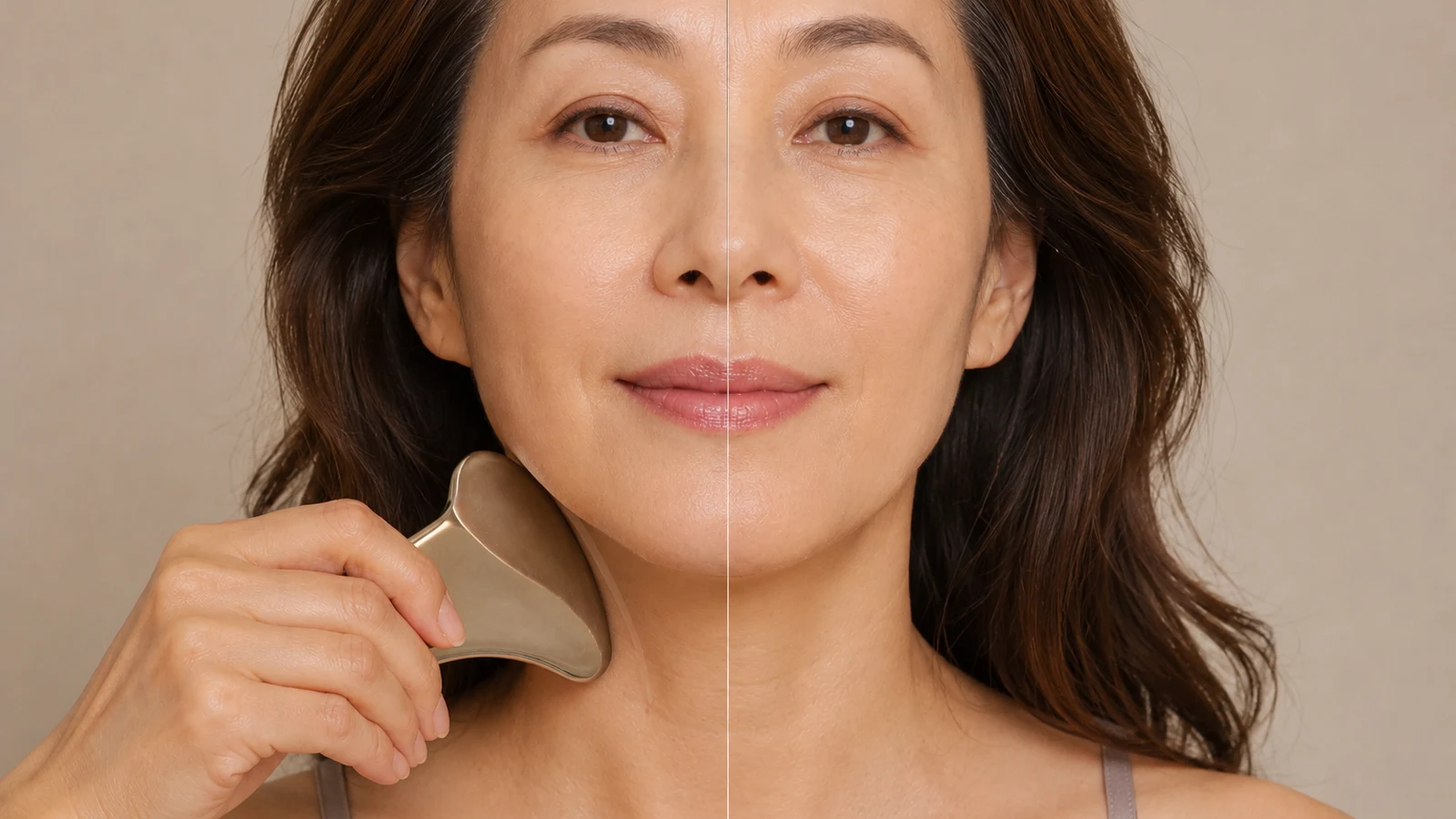
A student once slid her phone across the table, showed me a photo, and asked, half joking, "Which one of these is my real face?" One side of her jaw sat tighter than the other, and after noticing it once she saw it in every picture. Here's the part I told her first: nearly every face is a little uneven, and that unevenness needs no fixing. The question worth asking is different. Why does one side carry more tension than the other? That answer traces back to habits with names.
Draw one line before anything else
Lifelong, gradual asymmetry with no other symptoms is common, and it is the subject of this page. A sudden change is not. Drooping, numbness, or one side that stops moving evenly belongs to a doctor the same day you notice it, and no home routine has any business near it. Everything below assumes the slow kind.
Four habits that favor one side
Your body picks a dominant side for nearly everything, and the face keeps the receipts.
You sleep on a side, chew on a side, hold the phone on a side, angle toward the monitor on a side. Each choice loads one half of your face with tension the other half never receives, and the mirror shows you the running total of thousands of small, identical choices. A total built by habit can be eased by habit.
The sleep side. One cheek spends hours pressed into the pillow every night. Over years, that side carries more compression, and often more fine lines, than the one facing the ceiling.
The chewing side. Most people favor one side without knowing it. The jaw muscle there does extra work at every meal and grows more developed, and more braced, than its partner.
The device side. A phone held to the same ear, a monitor angled to the same corner of the desk: both load the jaw and neck on one side for hours while the other side rests.
The expression side. Some faces squint one eye, lift one brow, or smile a touch higher on one side, thousands of repetitions a week, none of them conscious.
Find your tighter side
Stand at a mirror with your face at rest. Press your fingertips along both jaws at once and compare, without judgment: which side pushes back? That side gets the extra minutes below.
A 5-minute balancing release
- Open on the tighter side Plan about twice the time here. This side has been doing extra work for years; let it have the attention first.
- Work the jaw corner Set fingertips or a stone along the jawbone at the tightest point and make slow, short passes, following the bone.
- Move up to the cheek and temple A few passes upward and outward. Jaw tension travels, and these two stops catch what it sends up.
- Give the other side one even minute Care, not construction. The relaxed side needs maintenance, never catching up.
- Close both sides down the neck Symmetrical, unhurried sweeps down each side, so the session ends the way you want the face to sit: even.
The habit half of the answer
The release eases what your habits already deposited. The habits themselves decide what gets deposited tomorrow: swap the phone ear now and then, chew on the neglected side, square the monitor to your chair, and let the bag change shoulders. None of it needs to be perfect. Occasional and conscious beats perfect and abandoned.
No one has a symmetrical face, and yours was never supposed to become one. What you have now is the list of habits tipping your scale, and the choice of which ones keep doing it.
Quick answers
Is it normal for one side of my face to be different from the other?
Yes. Nearly every face carries some lifelong unevenness, and no one else reads it the way you do in the mirror. The thing worth watching is change: a difference that appeared recently, or one side that moves or feels different than it did before.
When should I see a doctor instead of working on this myself?
Right away for anything sudden: drooping on one side, numbness, trouble smiling evenly or moving one side of your face, or asymmetry arriving with a headache, vision change, or slurred speech. Those need medical attention, not a routine. This article covers the other kind, the slow, habit-driven unevenness with no other symptoms.
Can working on just one side make my face lopsided?
A few extra minutes on the tighter side will not tip the balance the other way. You are helping a braced side catch up to a relaxed one. Keep every session gentle, stop before either side feels overworked, and the routine stays a correction, never a new imbalance.
Will switching my phone or chewing side actually change anything?
Slowly, yes. Balancing which side carries the daily load is the one move that addresses the cause instead of the residue. Years of habit take time to unwind, so pair the switch with the release rather than choosing between them.
Learn to read your own tighter side
Feeling the difference between your two sides takes a session or two of practice. My free 3-minute video walks the self-check and the balancing release together, so you can find your side and start on it tonight.
Watch the free 3-min videoYu-Ting Lan is a Taiwan-based international bojin instructor and the founder of Héhé Studio. She has taught her bojin method to more than a thousand students, from complete beginners to grandmothers, across Taiwan, Hong Kong, and Malaysia.