The Bojin Journal · Jaw & Neck
Why Your Jaw Feels Tight by the End of the Day, and a 3-Minute Evening Release
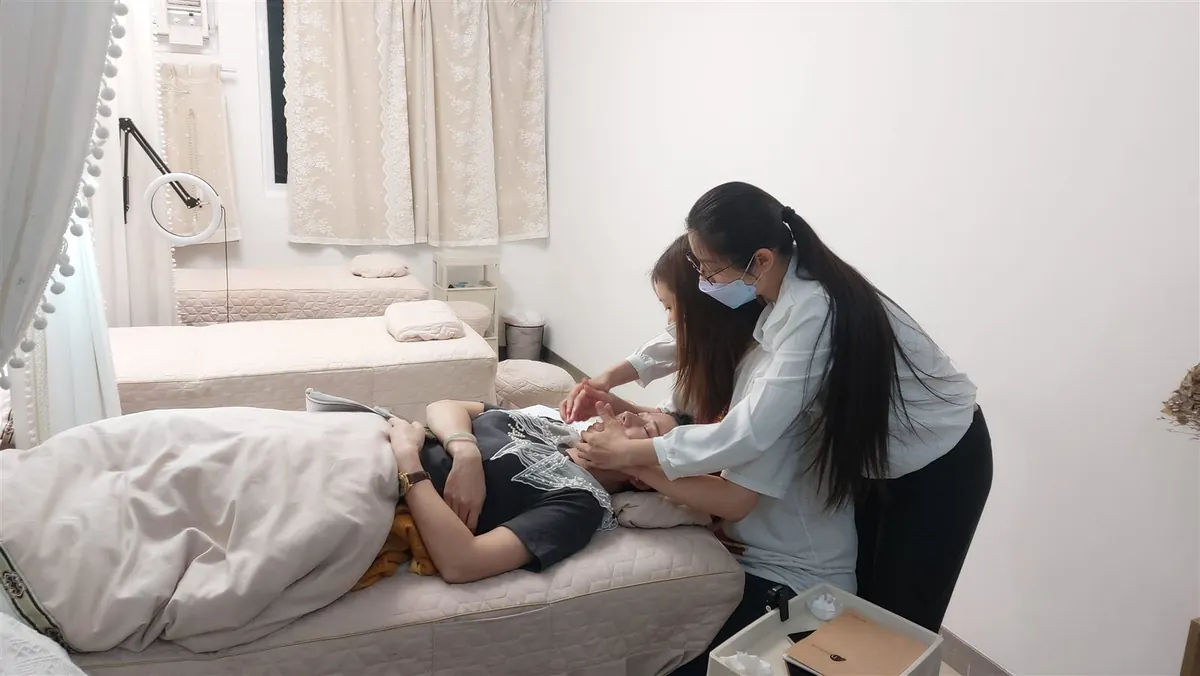
By the time you've finished a day of calls, meetings, chewing through meals on the run, and hours of looking down at a screen, your jaw has done a lot of quiet work you never noticed. It's often clenched without your permission more times than you'd guess. By evening, that adds up: the jaw feels set and tired, the neck feels short and stiff, and it's easy to carry all of it straight into bed with you. A few calm minutes right after you cleanse can help release what the day left behind, so you're not falling asleep with your jaw still holding on.
Why does my jaw feel so tight by evening?
Think about everything your jaw does in a normal day. It talks through calls and meetings. It chews through three meals and however many snacks, often more on one side out of habit than the other, which is one reason that side can end up feeling tighter (more on that in why one side of your face looks different from the other). And underneath all of that, for a lot of people, it clenches almost constantly, especially during anything stressful or focused. You usually don't notice you're doing it until your jaw feels tired or achy by evening.
Then there's "tech neck." Hours spent looking down at a phone or laptop pull the chin forward and down, which shortens the muscles at the front of the neck and keeps the jaw and neck locked in one tight position for most of the day. If it's specifically the low angle of a video call that gets you self-conscious mid-afternoon, a 2-minute jaw reset before your next call is the quicker, targeted version of this same release. By the time evening comes, none of that has had a chance to release. It's been building since morning.
So the tightness you feel at the end of the day isn't unusual or a sign anything is wrong. It's the ordinary residue of talking, chewing, clenching, and screen posture, all stacked up with nowhere to go. And unless you consciously release it, it's easy to carry that same tension straight into sleep. Some people even keep clenching through the night.
Why an evening release, not just a morning one
If you already know gua sha, this will feel familiar: bojin comes from the same family of Chinese hands-on face care. It's still its own deliberate method. What makes it work is three things: the order you work in, the angle you hold the tool, and the exact spot you're working.
A morning routine is about waking the face up. This one has a different job: it's a wind-down. Doing it right after you cleanse, before bed, gives your jaw and neck a chance to let go of the day instead of holding that tension through the night. It's a small ritual, but the timing is part of what makes it useful: it becomes a signal to your body that the day of talking, chewing, and clenching is over.
The traditional tool is a bojin stick: a slim, polished stainless steel tool shaped to follow the face. Clean fingertips or a gua sha stone work fine while you're learning. Either way, put on a little oil or cream first so nothing drags, and use the right, comfortable pressure: enough to feel it, never enough to hurt.
The right, comfortable pressure matters more than pressing harder at the end of a long day. Hold the right angle, work in the right order and place, and always finish down and off the neck.
Your 3-minute evening jaw and neck release
Do this right after cleansing, with a little oil or cream still on your skin. Work slowly: this is meant to calm you down, not wake you up. Always finish by sweeping down the neck; that last step matters as much as anything before it.
- Let your jaw drop first Before you touch anything, part your lips slightly and let your jaw hang loose for a few slow breaths. This unclenches the muscle you've likely been holding tight all day and gives you an honest starting point rather than working over a jaw that's still braced.
- Find tonight's tight spot Lightly press along the back corner of the jaw, just below the ear, and notice which side feels more tender or full tonight. It often shifts day to day depending on which side did more talking or chewing. Start there.
- Release the corner of the jaw Angle the stick or your fingertips to follow the jawbone at that tender corner. Make slow, short passes down and slightly forward, in that order, and let the muscle soften under a steady, comfortable pressure rather than a hard push.
- Glide along the jawline toward the chin From that corner, work down the length of the jawbone, keeping the angle tucked just under the bone. A few unhurried passes on each side helps the whole jaw feel looser, not just the one spot that was tightest.
- Finish down the sides of the neck This is the step to never skip, especially at night. Sweep from under the jaw down the sides of the neck to the base, one long slow pass after another. Working down and off the neck gives everything you released somewhere to go, instead of settling right back before you sleep.
What can I expect?
Most people notice their jaw feels looser by the end of this same short session, which makes sense since you've spent a few minutes consciously releasing a muscle that's been clenched for hours. As a nightly habit, some find it easier to settle into sleep, and the jaw feels less set the next morning too. That's a real, worthwhile result from a few honest minutes.
Now the honest limits. This is a calming wind-down ritual, not a treatment, and it can't stop clenching that happens while you're asleep. If you clench or grind your teeth at night, this doesn't replace a night guard your dentist may have recommended, and it isn't medical care. What it can do is send you into sleep with a little less tension in the jaw and neck than you had an hour before. Anything sudden, one-sided, painful, or that doesn't ease with rest is worth bringing to a doctor or dentist, not something to work through at home.
A tight jaw by evening is the ordinary cost of a day spent talking, chewing, clenching, and looking down at screens. Release it, unhurried, before you close your eyes. A few honest minutes worked in the right order won't undo years of tension in one sitting, but it can help you end the day the way you'd like: a little looser, a little calmer, and ready for sleep.
Quick answers
Is this different from a morning routine?
The moves are similar, but the purpose is a little different. A morning routine is about waking the face up before your day starts. This one is about winding down: releasing whatever tension the day left behind in your jaw and neck so you're not carrying it into sleep. Some people find the evening version feels calmer and slower, almost like a signal to their body that the day is done.
What if I clench my jaw in my sleep?
A lot of people do, often without realizing it until they wake up with a tight or tired jaw. This release won't stop clenching that happens while you're asleep, and it's not a substitute for a night guard if your dentist has recommended one. What it can do is send you into sleep with less tension already sitting in the jaw and neck, which some people find helps. If clenching or jaw pain is frequent or severe, that's worth mentioning to your dentist or doctor.
Can I do this after my nighttime skincare?
Yes, that's a good time for it. Right after cleansing, while there's still a little moisturizer or facial oil on your skin, is an easy moment to fold this in. It takes about three minutes and doesn't need any extra products beyond what's already on your face.
How long until my jaw feels less tight?
Many people notice their jaw feels looser and the evening tightness eases within that same session, because you're consciously releasing a muscle that's been clenched for hours. As a nightly habit, some find they fall asleep a little easier too. It won't undo years of tension in one sitting, and it isn't a treatment. It's a calming ritual, and consistency matters more than any single session.
See the order, angle, and spot for yourself
Reading about the evening jaw and neck release is one thing; watching it is another. My free 3-minute video walks you through the exact order to work in, the angle to hold, and the spots to focus on, so you can follow along tonight. Come see how a few calm minutes before bed can help your jaw let go of the day.
Watch the free 3-min videoYu-Ting Lan is a Taiwan-based international bojin instructor and the founder of Héhé Studio. She has taught her bojin method to more than a thousand students, from complete beginners to grandmothers, across Taiwan, Hong Kong, and Malaysia.