The Bojin Journal · Cheeks & Smile Lines
Smile lines settling in and cheeks a little lower? A gentle 5-minute mid-face lift
If the lines from your nose to the corners of your mouth look deeper than they used to, and your cheeks feel like they're sitting a touch lower, you're noticing something real. No few-minute ritual erases a fold or lifts a face. But a lot of what makes the mid-face look heavy is tightness and trapped fluid, and those you can gently ease. A short, careful routine can help your cheeks look fresher, a little less pulled-down, and a little more lifted-looking.
Why do my smile lines look deeper and my cheeks lower after 40?
A few things shift together around this age. The soft padding that keeps the mid-face full settles and thins, so there's less support holding your cheeks up where they used to sit. The skin has a bit less spring. And the little muscles you use to smile and chew all day stay busy, so the tissue around the smile lines tends to hold tension rather than let go.
On top of that, fluid can pool and sit in the lower cheek, especially by evening or after a salty meal or a poor night's sleep. That heaviness adds to the downward look and makes the folds read deeper than they are. A long travel day does the same thing, often more dramatically: see the post-flight cheek reset if you've ever caught your reflection at baggage claim and barely recognized your own face.
So part of what you're seeing is genuine change over time, and part of it is tightness and puffiness that comes and goes. That second part is the part a gentle routine can help with.
How the Bojin Method helps the mid-face
If you already know gua sha, you have a head start. Bojin grew from the same family of Chinese hands-on face care, so it will feel familiar. But it's its own, deliberate method. What makes it work is three things: the order you work in, the angle you hold the tool, and the exact spot you're working.
For the mid-face that matters, because you want to coax the cheek tissue upward and outward along the cheekbone, then guide the loosened fluid down and away. Done in the right order, at the right angle, the same few minutes feel different from rubbing at your face. A tool on its own comes with no method attached, so the method is what you're learning here.
The traditional tool is a bojin stick, a slim, polished stainless steel tool shaped to follow the face. You can start with clean fingertips or a smooth-edged gua sha stone you already own, such as a jade or rose quartz one, while you learn, but the stick is what the method was built around. The pressure is the right, comfortable pressure for you, firm enough to be felt, never enough to hurt or drag your skin.
Comfortable pressure matters more than pressing harder or barely touching. Held at the right angle and worked in the right order and place, that combination is the method, and it's what turns a few minutes into something your cheeks feel.
Your gentle 5-minute mid-face lift, step by step
Use a bojin stick or clean fingertips, and always over a little oil or cream so nothing drags across your skin. Work in order, follow the angle of the bone, and use the right comfortable pressure the whole way, firm enough to feel, never forceful and never so light your skin barely notices.
- Warm and settle Take three slow breaths and rest your warm hands over your cheeks for a moment. Let your jaw unclench and your shoulders drop. Starting from a calm, relaxed face makes everything that follows more comfortable and more effective.
- Read your face first Before you move anything, press gently along each cheek and notice where it feels tightest or puffiest. That quick check tells you where to spend a little more time and sets the order you'll work in, so you're never just going through the motions.
- Open along the cheekbone Place the tool or your fingertips beside your nose and glide upward and outward along the underside of the cheekbone, angling toward your ear. Follow the line of the bone. This is the move that eases the tightness pulling the smile-line area down.
- Ease the smile-line zone Work the soft area beside the fold with small, patient strokes angled up toward the cheekbone, never digging into the crease itself. Keep the pressure comfortable. You're softening the tension around the fold, not trying to press it away.
- Finish down the sides of the neck This is the step people skip, and it's the one that matters most. Sweep gently from in front of your ears down the sides of your neck to your collarbone, several passes. This gives the fluid you just loosened somewhere to go, so your cheeks look fresher instead of shifting the puffiness lower.
What can I expect?
In the near term, most people notice their face looks a little less puffy and more awake, the cheeks sit a touch fresher, and there's a pleasant, relaxed feeling that lasts. Do it regularly and it becomes a calming few minutes you look forward to, and a nice moment to help a serum sink in. Many women say their mid-face simply looks a little more lifted and rested, especially first thing or before an evening out.
Now the honest limits. This is a soothing self-care ritual, not a medical treatment, and it won't erase a fold, undo years of change, or truly lift your face the way people sometimes hope. What it can do is ease tightness, support circulation, and help you look fresher and a little more lifted. And anything sudden, one-sided, painful, or unusual is worth seeing your doctor about rather than working on yourself.
Your face has been carrying tension for years, and giving it a few calm, careful minutes is a kindness, not a fix you have to perfect. Go slowly, stay comfortable, and let the small fresher-looking changes be enough.
Quick answers
Can bojin get rid of my nasolabial folds?
No, and anyone promising that isn't being straight with you. Folds come from real changes in support and skin over time. What a gentle routine can do is ease the tightness and puffiness around them, so the area looks softer and fresher, but the fold itself stays part of your face.
How often should I do this mid-face routine?
A few times a week is plenty, and you do not need to do it daily. Consistency matters far more than pressing hard. A calm few minutes most days will do more than an occasional forceful session.
Is bojin the same as gua sha?
They come from the same family of Chinese hands-on face care, so if you know gua sha this will feel familiar. Bojin is its own deliberate method, built around the order you work in, the angle you hold the tool, and the exact spot, at a comfortable pressure. You can even use a gua sha stone you own while you learn the method.
Do I have to buy a bojin stick to try this?
No. You can begin with clean fingertips or a smooth-edged tool you already have, like a jade or rose quartz gua sha stone, while you learn the sequence and angles. The bojin stick is a slim, polished stainless steel tool the method was built around, so it's a nice thing to add once you know you enjoy the ritual.
See the order, angle, and spot for yourself
Reading about the angle is one thing; seeing it is another. Watch the free 3-minute video and I'll walk you through the exact order, the angle to follow along your cheekbone, and where to work, so your first mid-face ritual feels calm and clear from the start.
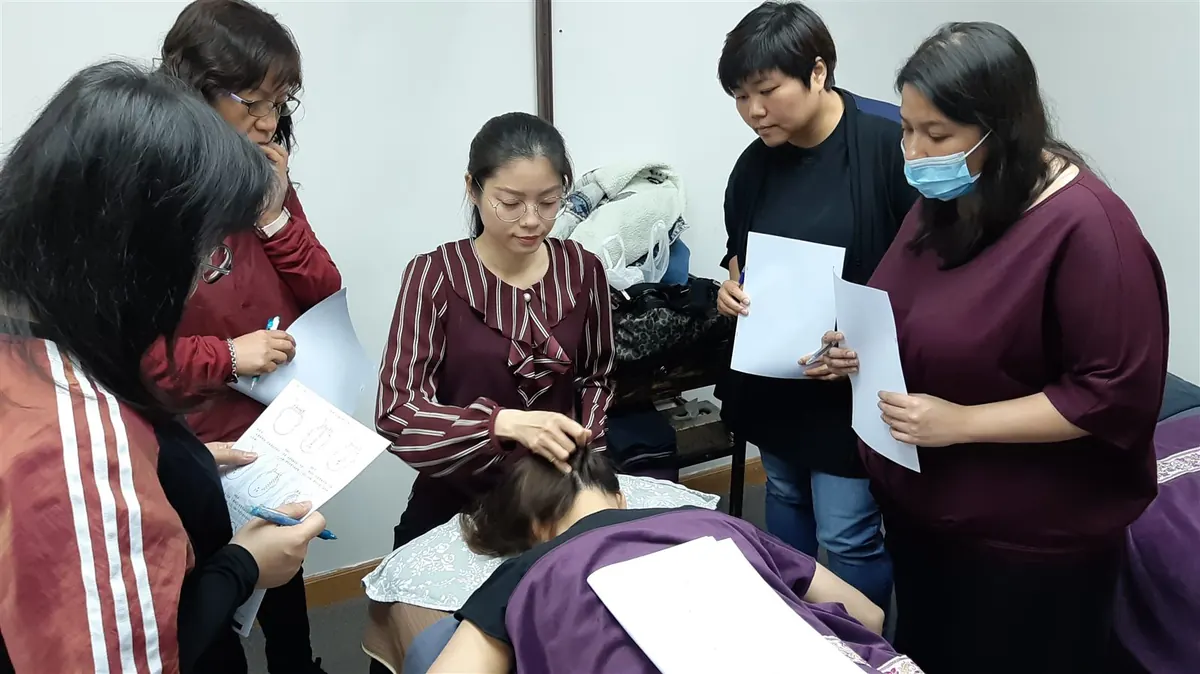
Watch the free 3-min videoYu-Ting Lan is a Taiwan-based international bojin instructor and the founder of Héhé Studio. She has taught her bojin method to more than a thousand students, from complete beginners to grandmothers, across Taiwan, Hong Kong, and Malaysia.