The Bojin Journal · Myths & real talk
Bojin vs. Face Yoga: Which One Fits What Your Face Needs?
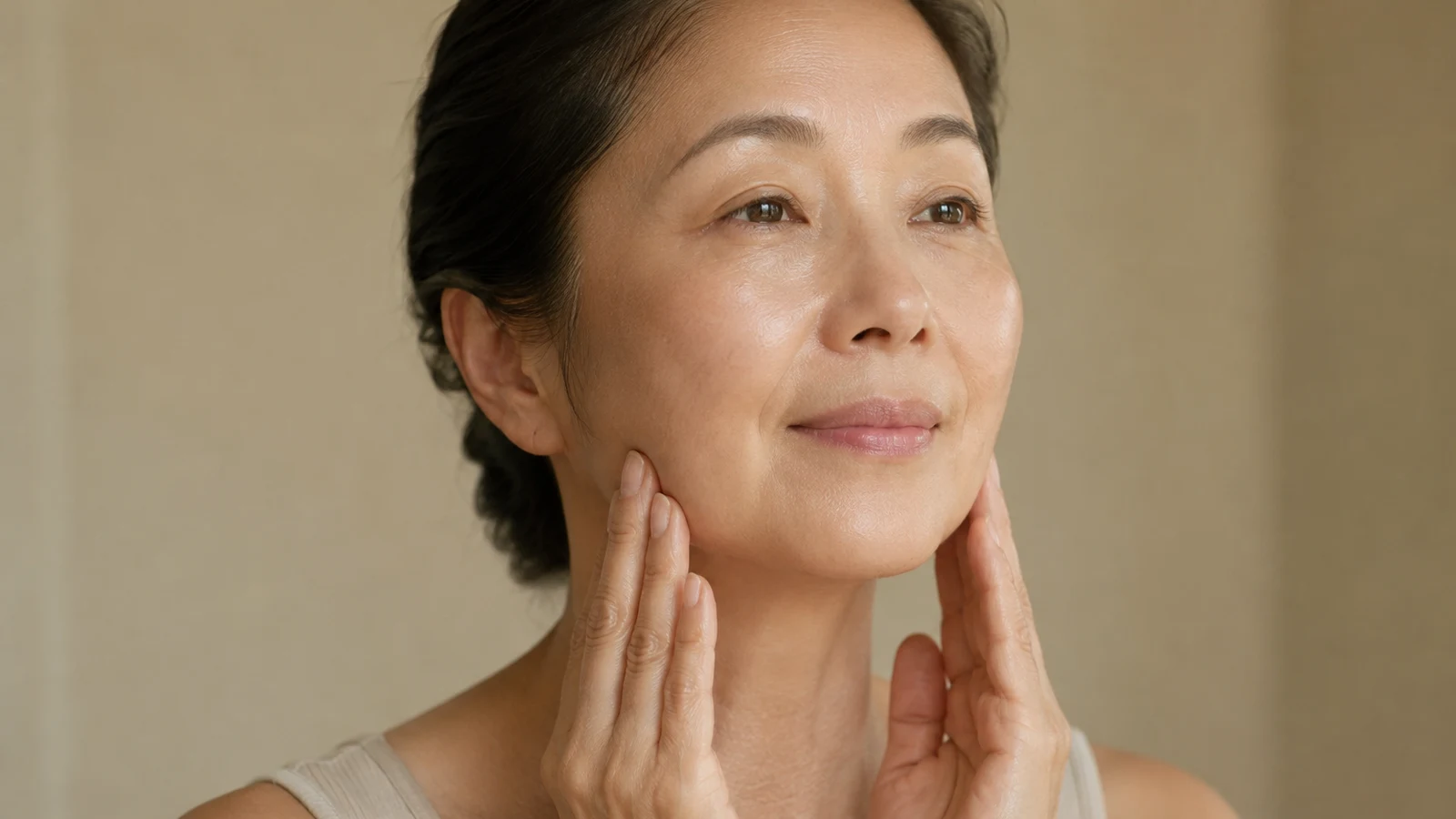
Somewhere in your saved videos there is probably a face yoga routine you tried for a week or two. You puffed your cheeks, held a wide-eyed stare, counted to thirty. Maybe it helped. Maybe your jaw felt more tired by Friday than it did on Monday. If you came away wondering whether you did the wrong exercise, or the right exercise for the wrong problem, you asked a better question than most of the internet bothers to answer.
Why these two get lumped together
Search for "natural face lift" or "no-Botox lift" and both show up on the same results page, side by side, as if they were two brands of the same product. They aren't. They do different jobs, and picking by thumbnail instead of by job is how a woman ends up feeling she has "tried everything" while the tightness in her jaw never once got addressed.
Face yoga is exercise. You contract a muscle, hold it, sometimes push against your own fingers, then release, and over months the muscle builds tone the way any exercised muscle does. Bojin asks your muscles to do nothing. You move a stainless steel bojin stick, or clean fingertips, in a set order, at a set angle, over set positions, to ease the tension already sitting in the tissue and give pooled fluid a route out.
The question that sorts it out
Ignore the marketing and ask yourself this at the end of a normal day: does my face feel overworked, or does it feel slack and puffy? Sit with it for a second. The answer points at two different tools.
A jaw or brow that feels tight, clenched, or braced by evening is already doing too much work. More exercise adds load to a muscle begging for rest. A face that feels soft, tired, and pooled by afternoon has a fluid-and-tension problem, and release suits it better than contraction. Match the method to the feeling, and both methods make sense.
Some weeks you need both. A jaw tight from a stressful month will not loosen through resistance holds; it wants release first. Once it settles, toning work on a relaxed muscle becomes a reasonable addition. The order matters more than the choice. Exercise layered onto braced tissue is the mistake I correct most often in class.
A 5-minute test you can run tonight
You need nothing new. A gua sha stone from your drawer, or clean fingertips with a little moisturizer for glide, covers it.
- Rest your hands on your jaw and forehead for three breaths Sort each area into one of two piles: held tight, or just tired and flat. This sorting is the whole test.
- Tight spots get worked, not exercised Set your fingertips or the tool along the jawbone or across the brow and make slow, short passes over the exact spot, following the bone instead of pressing into the muscle.
- Puffy spots get swept, not held Use longer, slower passes outward and down, toward the ear and along the neck, so the pooled fluid has a direction to travel.
- Every pass ends down the neck Whatever you eased needs somewhere to go. A few slow sweeps down the sides of the neck close the route.
- Judge by feel, not by mirror A looser, calmer feeling right after the session tells you that you matched the method to the problem. The mirror catches up later.
What each one can honestly deliver
Face yoga, kept up over months, builds muscle tone on the same logic as exercise anywhere on the body. It demands repetition, and it can backfire on an area that needed release before it needed strength.
Bojin makes a smaller, faster promise: a worked area feels less held and looks a little more settled, and the effect is gentle and temporary, building with consistency rather than arriving overnight. It builds no muscle and replaces no strength habit. Different jobs, not a contest. Most of the work is knowing which job your face is asking for tonight.
You owe no loyalty to either internet camp. Ask your face what it carried home today, tension or tiredness, and give tonight's five minutes to that answer.
Quick answers
Can I do both face yoga and bojin?
Yes. Many of my students keep both. The one thing I ask is that they never stack them back to back on the same worked-up muscle. A common rhythm: face yoga sets on two days, a bojin session on a different evening. One builds, the other eases, and neither undoes the other.
Which one is better for wrinkles?
Neither erases a wrinkle. Face yoga aims at muscle tone over months. Bojin eases the tension and pooled fluid that deepen the look of a line today. Two different pieces of the picture. Any video promising more than that is selling you something.
I already do face yoga and my jaw feels more tense, not less. Why?
Your jaw was already clenched before the workout, and the workout asked it to clench harder. A muscle that spends the day braced does not want more contraction in the evening. It wants release first. Try a gentle session in place of the exercise for a week and compare how the jaw feels by Friday.
Is bojin a type of face yoga?
No. Face yoga is exercise: you contract a muscle and hold it. Bojin is hands-on release: a stainless steel tool or your fingertips, moved in a set order, at a set angle, on a set position, to ease tension and move fluid along. Your muscles do no work at all during a session.
See a real release, not an exercise hold
If tonight's answer was "tight, not tired," watching one real release will teach you more than another exercise video. My free 3-minute video walks through the order, the angle, and the exact spots, so you can feel the difference on your own face.
Watch the free 3-min videoYu-Ting Lan is a Taiwan-based international bojin instructor and the founder of Héhé Studio. She has taught her bojin method to more than a thousand students, from complete beginners to grandmothers, across Taiwan, Hong Kong, and Malaysia.