The Bojin Journal · Root cause & tension chains
Why Your Face Looks More Tired at 9 PM Than at 9 AM

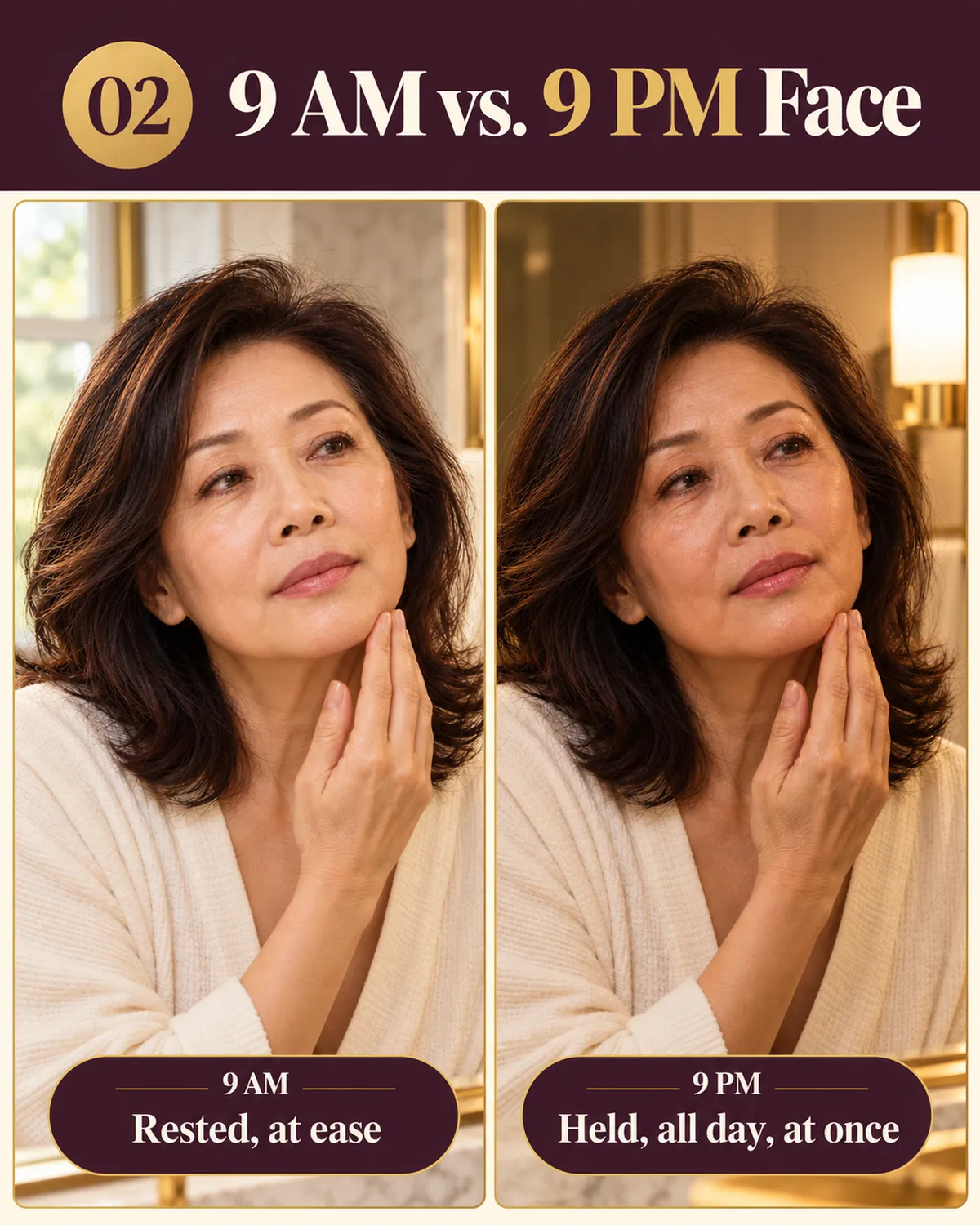
The morning mirror is kind. You brush your teeth, glance up, and the face looking back seems fine. Then comes the 9 PM version. Same mirror, same light, and somehow that face has aged ten years since breakfast.
- The day didn't take something out of your face, it added something, hour after hour, onto the same small group of muscles.
- Proof: if your 9 PM face were true aging, it would still be there at 9 AM. It mostly isn't.
- Three unnoticed holds build it: the screen squint, the quiet jaw clench, and the phone-jut that pulls your chin forward.
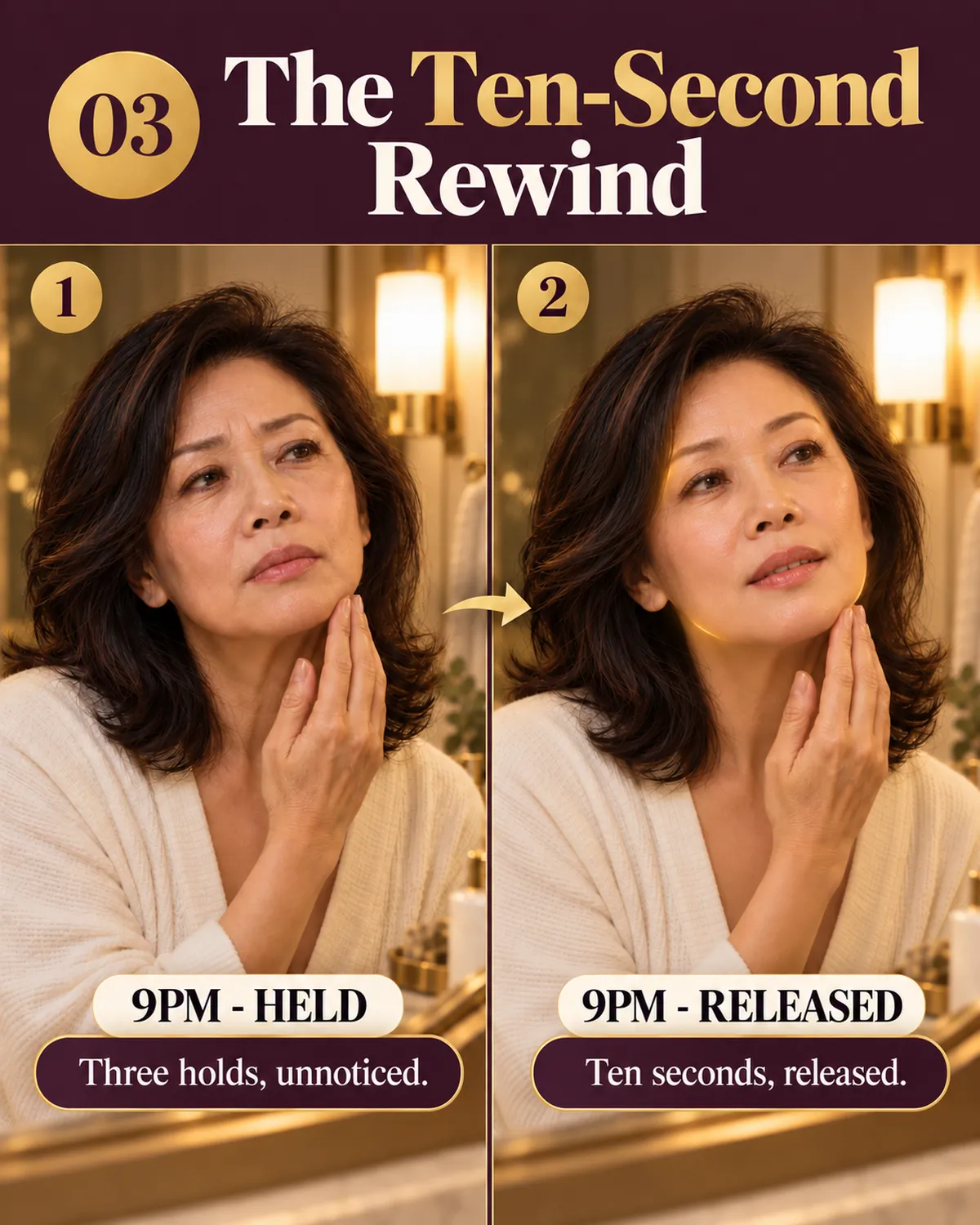
- A ten-second check tonight (unclench, smooth the brow, drop the shoulders) shows you it's tension, not age, because age doesn't move that fast.
Most women blame the day for wearing them out. After teaching this work to nearly a thousand students in Taiwan, I read the evening face differently. Once you see how the adding works, you can interrupt it.
The proof is that morning keeps happening
Here is the good news inside this. If your 9 PM face were true aging, it would still be there at 9 AM. It mostly is not. You sleep, the muscles of your face finally let go, and by morning the extra years have receded. The evening version was never structure. It was use.
Three small jobs your face never signed up for
Your facial muscles were built for expressions, short jobs, then rest. Modern days hand them a different assignment: holding. Three holds in particular build the 9 PM face.
The squint. Screens keep the muscles ringing your eyes in a low, steady contraction that can run for hours. You stop noticing it by mid-morning. Your face does not.
No single muscle did anything dramatic. Together they all hold a little, at the same time, in the same direction.
The clench. Check your back teeth right now. The chewing muscles at your jaw corners are strong enough to grind food, so a light all-day grip costs them nothing. Your lower face pays for it by dinner.
The jut. Every glance at a phone slides your chin forward and down. The muscles of your neck and under your chin hold your head there, hour after hour.
Stand at the mirror tonight when the tired face appears. Let your back teeth come apart. Let your brow go smooth. Breathe out and let your shoulders drop. Now look again. Most people see a small but immediate difference, because age does not move in ten seconds.
Where bojin comes in
Bojin is a method, built on three decisions: the order you work in, the angle you hold, and the position you choose. Add comfortable pressure and that is the whole craft. Gua sha is a tool. Bojin is a method. Different jobs, not a contest.
The tool I teach with is a stainless steel bojin stick, with a broad edge for longer strokes and a rounded tip for small spots. Ours is coming soon. Until then, the gua sha stone already in your drawer works fine for learning.
A short evening sequence for the held face
Do this two or three times a week, in the evening if that is when your face bothers you most. Ten minutes, clean skin, and a few drops of facial oil so the tool glides.
- Unclench first Teeth apart, one slow breath. Starting soft matters more than any stroke.
- Neck sides, downward Rest the broad edge behind your ear and glide gently down toward the shoulder. Stay off the front and center of your throat completely.
- Jawline, chin to ear Slow passes along the bone, with a few extra gentle ones at the corner where the chewing muscle bunches.
- Brow and temples Use the rounded tip between the brows with small upward strokes, then sweep from the outer brow to the temple and rest there in light, slow circles.
- Check your pressure Enough to meet the tight spot, never enough to hurt.
What this honestly does, and does not
A session can soften the held, set look of an evening face, gently and temporarily. It cannot erase lines that remain when your face is fully at rest. It cannot change bone, lift what time has lowered, or replace the care of a doctor or dermatologist.
The mirror already shows you the total every night at 9. Now you know how to answer it.
Quick answers
Why does my face look more tired at night even when I slept well?
Sleep resets your muscles, but it has no say over what today asks of them. Hours of squinting, clenching, and phone posture accumulate in the same small muscles regardless of last night, so a rested face can still arrive at 9 PM carrying the whole day.
Is my face actually aging faster on stressful days?
What you see at night is held muscle, and most of it lets go by morning. Deep lines that remain when your face is completely at rest belong to a separate, structural story, one that no single day created and no at-home tool erases.
Should I do this every evening, since the tension comes back every day?
No. Two or three sessions a week is the rhythm I teach, and it serves your skin better than nightly work. The daytime skill of catching your clench and squint as they happen is free, and you can use it all day.
Do I need the bojin stick before I start?
No. The stone you already own can carry the order, the angle, the position, and the pressure while you learn. The stainless steel bojin stick is coming soon, and starting tonight beats waiting for any tool.
Find Your Tightest Link (2-Min Quiz)
For some faces the evening story is mostly squint, for others it's the jaw or a phone-posture neck. Take my two-minute quiz to find where yours starts.
Take the Face Tension Quiz & Get My Custom Protocol →Free · 2 minutes · Your custom protocol, sent to your email
Yu-Ting Lan is a Taiwan-based international bojin instructor and the founder of Héhé Studio. She has taught her bojin method to more than a thousand students, from complete beginners to grandmothers, across Taiwan, Hong Kong, and Malaysia.