The Bojin Journal · The method
What You Feel Under the Tool, and What Each Sensation Means
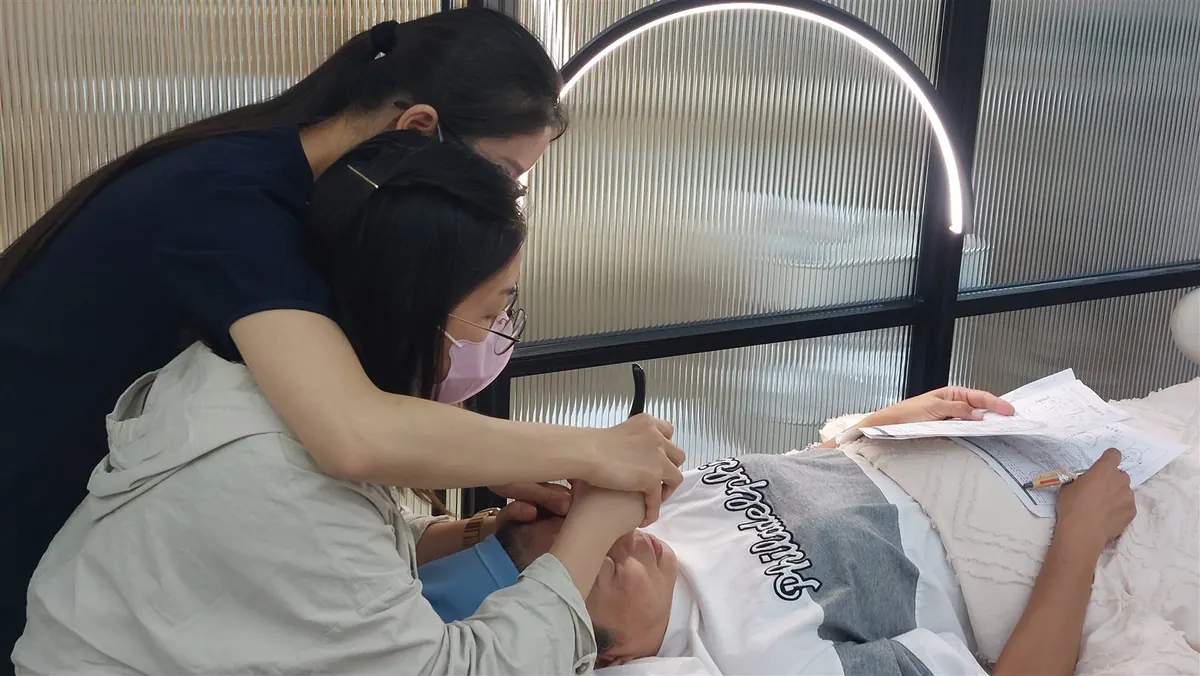
The most common question I get is not about which stroke to use. It is quieter than that, asked half-embarrassed: "Am I feeling the right thing?" A woman presses along her jaw, feels a dull ache, and freezes, unsure whether she found the tension or is about to hurt herself. Your face is talking to you the whole time you work. Once you can read what it says, you stop guessing and start adjusting.
So here is the idea before the list: not every ache is bad, and not every "I feel nothing" is good. The sensations sort into ones that mean you are on the right track, ones that mean adjust, and ones that mean stop. Learn the difference and your own hand becomes the safest guide you have.
The sensations that mean you are on track
The good ache. A dull, tender, almost satisfying soreness when you settle on a tight spot, the kind people call "hurts so good." It stays where you are pressing, it does not sharpen, and it softens as you hold or circle gently. This is the one you are looking for. It usually means you have found a real point of held tension, and easing it kindly is the whole job.
The warm spread. A gentle heat and a soft flush of pink as you glide the broad edge over a wider area. This is circulation waking up under a calming pass. It is comfortable, it spreads out rather than sitting on a point, and it fades soon after you finish. Nothing to worry about, and often the nicest part of a session.
The light tingle. A faint, fizzy, pins-of-champagne feeling that comes and goes as you work, then settles. On its own, brief and mild, it is usually just the area waking up. Keep your pressure gentle and it passes.
The sensations that mean adjust, not stop
Nothing at all. A real signal, and the one most people misread. If a stroke feels like the tool is skating over the top and nothing is happening underneath, you are not reaching the tension. The fix is not to press harder. It is to tilt the angle up a little so the edge meets the layer beneath, and to slow down. Force is not what was missing; the right angle was.
A tender spot that is sharper than its neighbors. If one point flares up more than the area around it, that is often where tension has gathered, and it is asking for less, not more. Lighten your hand, shorten your visit, and come back to it another day. A tender knot eases over several unhurried passes across different sessions, never by grinding it down in one.
Comfortable pressure, never pain. A dull ache that eases is the method working. A sharp, bright, or stinging pain is the method going wrong, every time, no exceptions. When you are unsure which one you are feeling, treat it as the sharp kind and ease off. You lose nothing by being gentle, and the effect you are after was always gentle and temporary anyway.
The sensations that mean stop
Sharp, bright, or stabbing pain. This is never part of bojin. It usually means too much pressure, an edge tipped up and digging, or the tool pressing straight onto bone. Lift off, and if the same spot keeps producing it, leave that spot alone.
Pain that shoots or radiates. A sensation that travels away from where you are pressing, rather than staying under the tool, means you may be on a nerve. Stop working that area.
Numbness or pins-and-needles that linger. A passing tingle is fine; a numbness that stays after you lift the tool is a signal to stop for the day.
Anything sudden, one-sided, or unfamiliar. A new, one-sided pain or change in your face is not something to work on with a tool. That belongs in a doctor's office, not under a stick.
The one that comes later: next-day tenderness
Sometimes the feedback arrives the morning after. A mild tenderness in an area you worked for the first time, similar to the ache after light exercise, can be normal. It should be faint and fading. Bruising, soreness that lasts, or anything that worsens means you pressed too hard, and the correction is simple: less pressure and shorter sessions next time. What you see in the mirror afterward has its own tells, and I keep those in a separate guide on what is normal after bojin versus a warning sign.
You do not need years of training to read your own face. You need to know that a dull ache that eases is a green light, that "nothing" means change your angle, and that sharp always means stop. Hold those three and your hand will tell you more than any diagram can.
Quick answers
Is a bojin session supposed to hurt?
Not in the sharp sense. A dull, satisfying ache on a tight spot that eases as you hold it is normal and often means you found real tension. A bright, sharp, or stinging pain is not part of the method and is your cue to lighten up or move off the spot. Comfortable pressure, never pain, is the rule.
Why does one spot feel tender when the rest of my face feels fine?
A spot that is tender under gentle pressure is usually where tension has gathered, which is exactly why it draws your attention. Work it kindly and briefly rather than grinding at it, and it typically eases over a few unhurried visits across different days, not in one hard session.
Is it normal to feel tender the next day?
A mild tenderness the next day, like the feeling after light exercise, can be normal if you worked an area for the first time. Bruising, lasting soreness, or anything that worsens is a sign you pressed too hard, and the fix is less pressure and shorter sessions next time.
What should make me stop immediately?
Sharp or radiating pain, numbness or pins-and-needles that linger, broken or newly irritated skin, or any pain that is one-sided and unfamiliar. These are not the ordinary aches of the method. Stop, and if anything sudden or one-sided in your face concerns you, bring it to a doctor rather than the tool.
Feel the difference for yourself
The good ache and the wrong sharp pain are easy to tell apart once you have felt them side by side. My free 3-minute video walks through a gentle session so you can match what you feel to what you see, and trust your own hand.
Watch the free 3-min videoYu-Ting Lan is a Taiwan-based international bojin instructor and the founder of Héhé Studio. She has taught her bojin method to more than a thousand students, from complete beginners to grandmothers, across Taiwan, Hong Kong, and Malaysia.