The Bojin Journal · The method
Fingers, a Gua Sha Stone, or a Bojin Stick: What to Use
One of the first things people ask me is what they need to buy before they can start. My favorite answer to give is: nothing. The most important tool for bojin is already attached to your hands. Everything else, the gua sha stone in your drawer, a proper bojin stick, is there to help you hold what your fingers already teach you. Here's what each one does best, so you can start tonight and add to it only when you actually want to.
Start tonight with clean fingertips
Your fingertips are a wonderful first tool, and I mean that seriously, not as a consolation prize. They're sensitive, so they read your face as you go. They can't slip or press too hard by accident. And they cost nothing, so there's no reason to wait.
Wash your hands, add a few drops of facial oil or a little moisturizer so you're not dragging the skin, and use the pads of your fingers to work in the order, angle, and comfortable pressure the method asks for. For the delicate skin around the eyes especially, fingers are often the kindest choice of all. If you learn nothing else but how to do this well with your hands, you already have the method.
The gua sha stone you already own works too
If you bought a gua sha stone once, whether jade, rose quartz, or something else, don't feel you have to replace it. It makes a perfectly good tool for bojin. The trick is that bojin asks you to use it differently: less long, broad gliding, more precise, deliberate work in the right spots.
Use the smooth, rounded edge of the stone, keep a little oil on your skin so it glides, and bring the same three things to it every time: order, angle, position. The stone is just the object in your hand. What turns it into bojin is the method you bring, and that travels with you no matter what you're holding.
The tool made for the method: a bojin stick
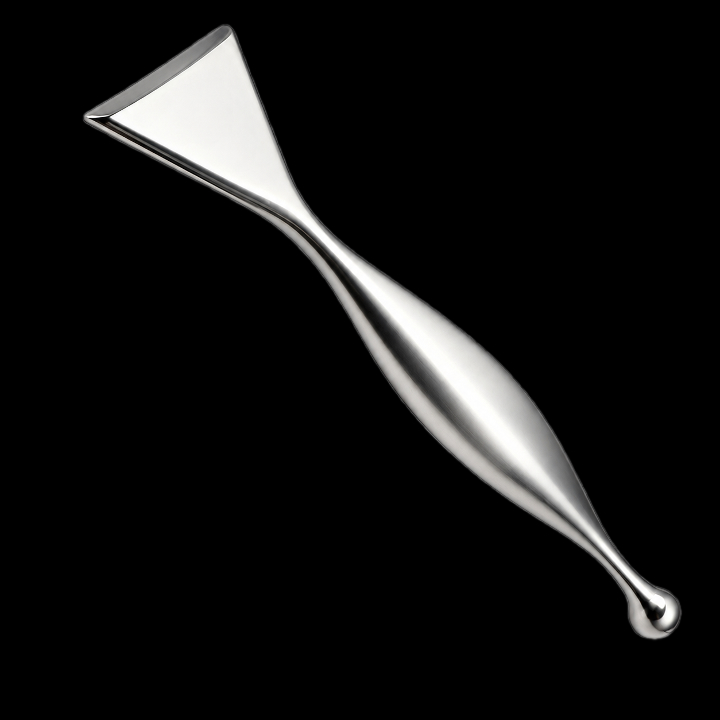
The tool the method was built around is a bojin stick: a slim, polished stainless steel tool, shaped to follow the curves of the face. It has two working ends. A broad, smooth edge for larger areas like the forehead, cheeks, and neck, and a small rounded tip for delicate spots such as around the eyes.
What a dedicated stick really adds is a shape made for the job. Its broad edge suits the big planes of the face and its narrow tip sits in the small, careful spots, so it can help you hold the angle once you know the method. If you want the fuller explanation of why many bojin sticks are made from stainless steel, read why a stainless steel bojin stick exists.
- Match the end to the area Broad edge for the big planes of the forehead, cheeks, and neck. Small rounded tip for careful spots like the brow and around the eyes.
- Always add a little slip A few drops of oil or a layer of cream, every time, whatever tool you're holding. Nothing should ever drag on dry skin.
- Keep it clean Wipe your tool before and after, whatever you hold.
- Let the tool hold the angle, not the force A tool's job is to hold a precise angle, not to let you press harder. Keep the pressure comfortable and let the shape do the guiding.
The tool matters far less than the method behind it. Fingers, your gua sha stone, or a bojin stick can all carry the same order, angle, and comfortable pressure. Start with what you have; add a stick when you want more precision, not because you need permission to begin.
So which should I use?
Think of it as a gentle progression, not a decision you have to get right on day one. Start with your fingers to learn the feel of the method. Reach for the gua sha stone in your drawer when you want a firmer edge for the cheeks or jaw. Add a bojin stick when you're ready for the extra precision and want the angle held for you. There's no wrong door, and no purchase you must make to feel a real difference tonight.
What can I expect?
Whatever you hold, expect the same gentle, temporary result: a face that looks a little calmer and more rested after a few quiet minutes. A better tool won't give you a dramatically different outcome. What changes the result is doing the method well: the right order, angle, position, and a comfortable pressure. The tool only helps you hold those.
And to be clear: this is gentle self-care, not medical care, no matter what's in your hand. No tool makes it a treatment, and none can do what a needle or a procedure does. It is a calm, regular habit for the everyday tension we carry, and that's a lovely thing for it to be.
So don't let "I don't have the right tool" keep you from starting. You already have the best one. Begin with your hands tonight, add a stone or a stick when it feels right, and let the method, not the object, do the quiet work.
Quick answers
Do I have to buy a bojin stick to start?
Not at all. You can begin tonight with clean fingertips, and a gua sha stone you already own works too. A bojin stick is something to add later, when you want more precision and the right angle held for you, not a barrier to starting today.
Can I use my fingers for bojin?
Yes. Fingers are the best place to learn the feel of the method because they help you notice pressure, tenderness, and where your face holds tension. They are especially kind around delicate areas.
Can I just use the gua sha stone I already have?
Yes, and it's a lovely place to start. Use the smooth, rounded edge of your jade or rose quartz stone, add a little oil so it glides, and apply the same order, angle, and comfortable pressure you'd use with any tool. The stone is the tool; the method is what you bring to it.
When does a dedicated bojin stick become useful?
Add one when you want more precision, especially for small spots where your fingers feel too soft or a broad stone feels awkward. It is a useful upgrade, not something you need before you begin.
Watch it done, with whatever you have
In my free 3-minute video I use a simple tool, but everything you'll see works just as well with clean fingertips or your own gua sha stone. Come watch the order, the angle, and the comfortable pressure, then follow along tonight with whatever is already in your drawer.
Watch the free 3-min videoYu-Ting Lan is a Taiwan-based international bojin instructor and the founder of Héhé Studio. She has taught her bojin method to more than a thousand students, from complete beginners to grandmothers, across Taiwan, Hong Kong, and Malaysia.