The Bojin Journal · Rituals & routines
What Should Your Evening Face Ritual Actually Undo?
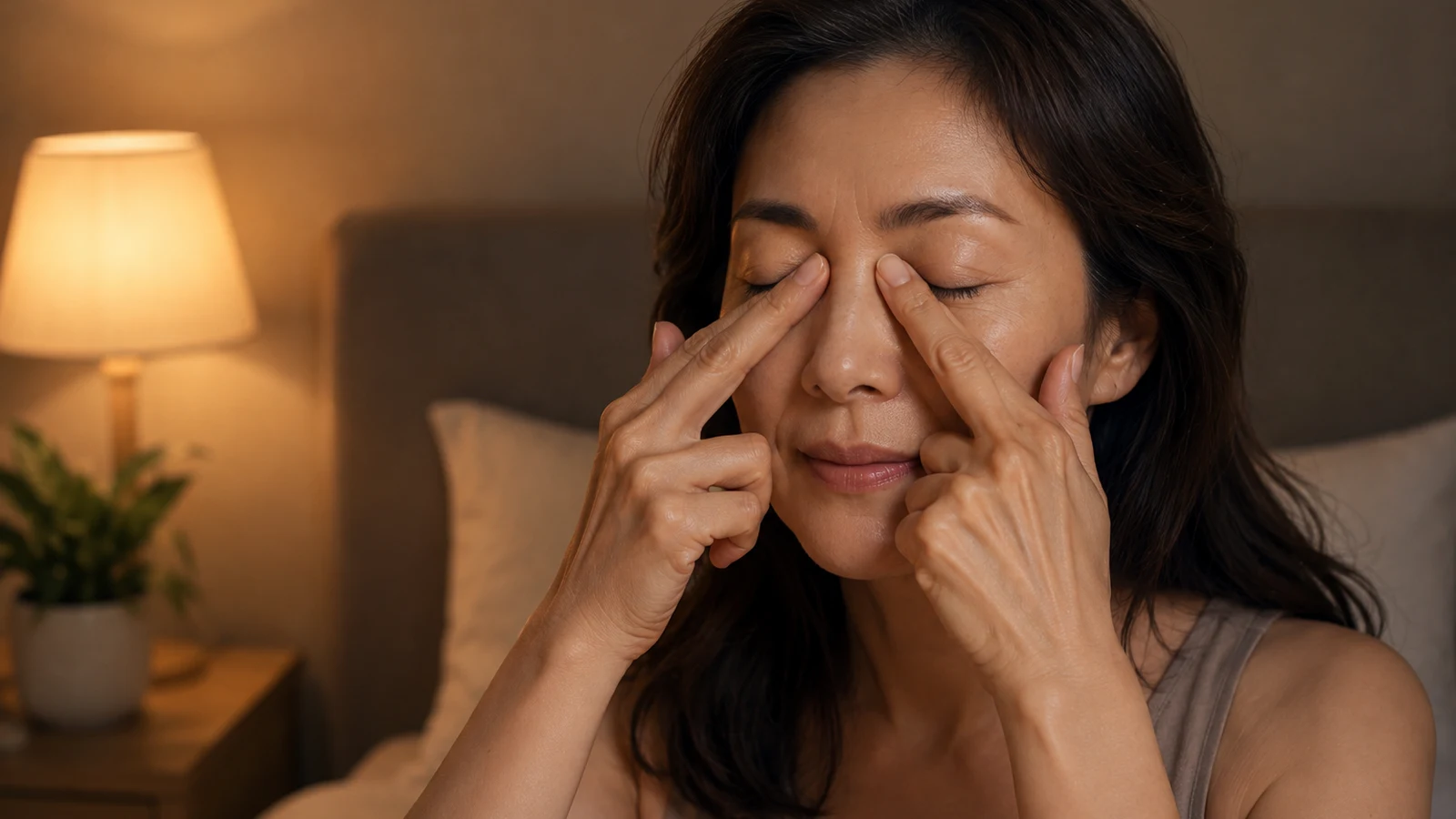
Your evening routine already covers what goes onto your face: the cleanse, the serum, the cream. It skips the other half of the ledger, what today put into your face and left there. The squint from six hours of email. The jaw you held through the drive home. The groove your sunglasses pressed into your temples. A wind-down ritual starts by counting what the day deposited, because you can't release what you haven't named.
Take inventory before you touch anything
Spend thirty seconds on an honest audit before you pick up a stone or raise a fingertip. Most days leave a short, predictable list, and yours repeats more than you'd think.
A morning ritual prepares your face for a day that hasn't happened yet. An evening ritual undoes a day that already has: screen squint at the brow, a clenched jaw from meetings, frames pressing the temples, fluid settled by dinner. Name what today put there, and tonight's five minutes go exactly where they're needed.
Ask four questions. Did I squint at a screen for hours? Did I clench through anything, a call, a deadline, traffic? Did glasses, sunglasses, or a mask press one spot all day? And right now, does my face feel more puffy or more tight? Your answers write tonight's routine. A generic full-face pass answers none of them.
Match the release to the day you had
Skip what doesn't apply. The ritual bends to the day, never the other way around.
- Screen day: start between the brows Hours of reading collect first in the vertical space between your eyebrows. Short upward strokes there, until the held-squint feeling lets go.
- Stressful day: go to the jaw A hard conversation lives at the back corner of the jaw by nightfall. Follow the bone down with slow passes, and close with sweeps down the neck.
- Glasses or a mask: release the contact points The nose bridge, the temples, wherever frames or straps pressed. A few light passes each. This tissue took contact all day; give it relief, not more pressure.
- Puffy day: end with a full-face sweep Slow passes outward and down, cheeks to jaw to neck, so the fluid you stirred has a route out before you lie down flat for eight hours.
- Every night: three breaths, hands resting on your face No technique. Warmth, weight, and the signal that the bracing can stop now. My students skip this step first, and it's the one that makes the ritual a wind-down instead of a chore.
What tonight's five minutes change
Sleep still does the heavy overnight repair; nothing here replaces it. What the ritual changes is the starting point: you sleep without the day's tension still braced into your face, and morning tends to greet you looking a little more like yourself. The effect is gentle and cumulative, night over night, never a single dramatic before-and-after.
Tomorrow morning's ritual can get you ready for a day you haven't lived. Tonight has a simpler job: set down what today handed you, and go to bed carrying none of it. Some nights this is easier with company: sharing this with someone you love turns the same five minutes into a ritual for two.
Quick answers
Can I do my evening ritual in bed?
Propped up against the headboard, yes. Flat on your back, better not: fluid you stir up wants a downhill route, and lying flat takes that route away. A few minutes sitting up before you slide down is the order that works.
Should I do this before or after my skincare?
After cleansing, before the final layer of night cream. Clean skin plus a light layer of product gives the right glide. A full face of finished skincare turns the tool into a sled; it slips over the surface instead of holding contact with the tension underneath.
What if I wear glasses or a CPAP mask overnight?
Frames and straps press the same few spots for hours: the nose bridge, the temples, sometimes the cheeks. Give those exact contact points a brief release before you put the equipment on, not just after you take it off. Prevention beats repair on skin that gets pressed every single night.
Is this the same as the morning face ritual?
Different jobs. The morning ritual wakes circulation and preps your face for a day that hasn't happened. The evening one releases what the day already deposited: screen squint, a held jaw, pressed temples. One looks forward, the other looks back, and they meet in the middle at consistency.
See a full wind-down session
Matching the release to the day is easier watched once than memorized from a list. My free 3-minute video runs a complete evening pass, order and angles included, ready for tonight.
Watch the free 3-min videoYu-Ting Lan is a Taiwan-based international bojin instructor and the founder of Héhé Studio. She has taught her bojin method to more than a thousand students, from complete beginners to grandmothers, across Taiwan, Hong Kong, and Malaysia.