The Bojin Journal · Rituals & routines
Sharing This With Someone You Love
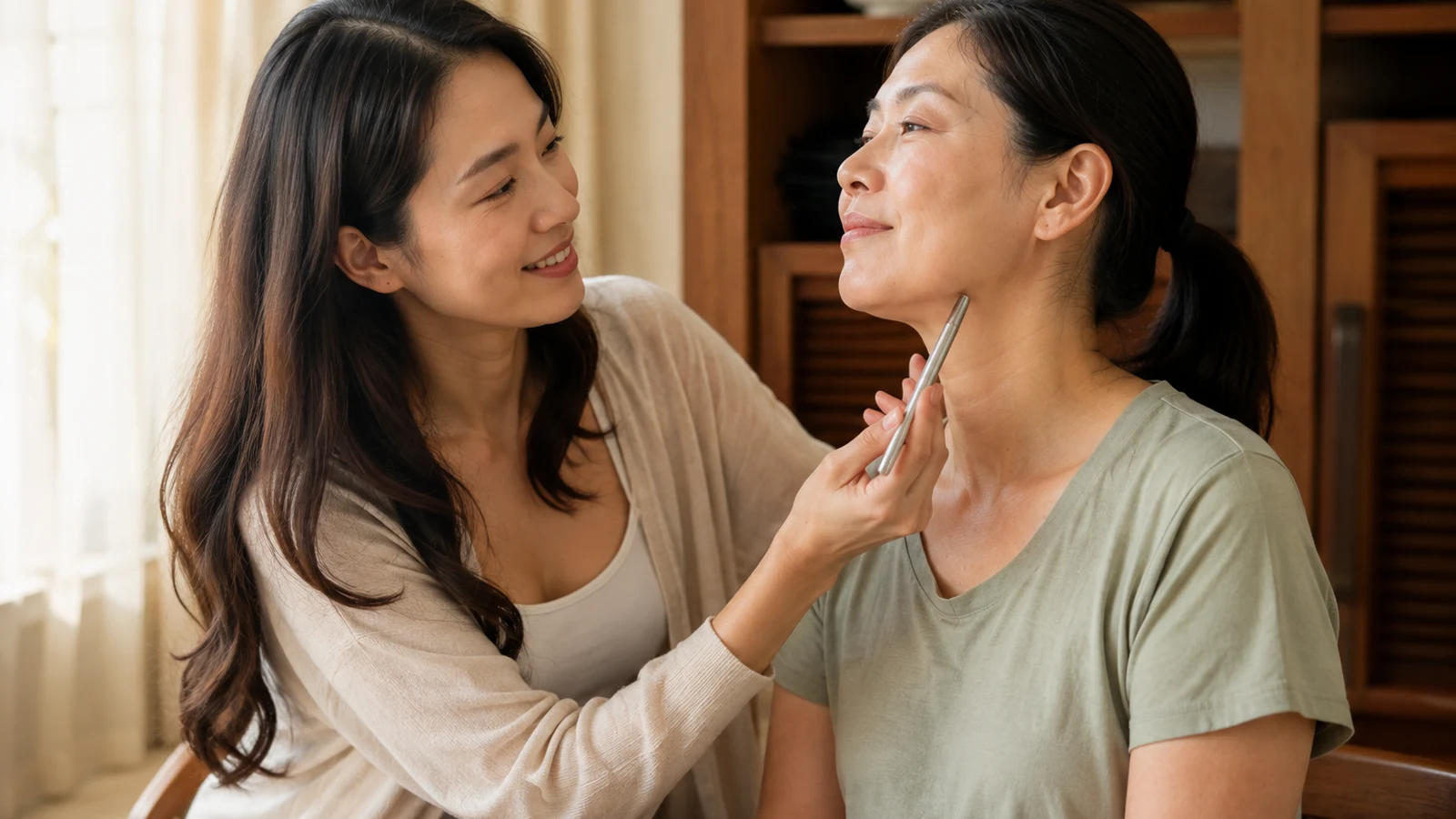
My favorite students rarely arrive alone. A mother and daughter who keep a Sunday session. Two sisters an ocean apart who practice over video calls before bed. A friend group whose abandoned gua sha stones became a standing bojin night. If you've been practicing alone and thinking of a particular person the whole time, this page is the invitation you hand her.
Why the habit keeps better with two
Practicing with someone changes two things at once. The habit survives, because showing up for your sister on a tired Tuesday is easier than showing up for yourself. And the work improves, because a second pair of hands reaches what yours can't: your own jaw corner and neck sit at awkward angles to your own wrists, and hers don't. Every partnered class I teach discovers this in the first ten minutes, usually with laughter.
The rule that changes with a second face
On your own face, you feel the tension under your fingers and know at once when to ease off. On someone else's face, you feel nothing. You know only what she tells you. Communication has to replace instinct, out loud, every session, no exceptions.
Run the check-first list together before anyone touches anyone: skin irritation, recent injectables, anything on the skip-for-now list. Say it out loud. Assumptions are for your own face; questions are for hers.
A first session for two
Keep the first one short. You are building a habit you'll both want back next week, not performing a masterclass.
- Sit facing each other, or side by side at a mirror Whoever receives should sit comfortably and speak freely. Strained necks make poor students and worse teachers.
- Ask before you touch, and keep asking "How's this pressure?" costs two seconds and replaces every wrong guess. The question stays open through the whole session.
- Work one area: the jaw Slow, short passes along the jawbone toward the ear, light pressure, check-ins as you go. One area done kindly beats five areas rushed.
- Close with sweeps down the neck Unhurried, both sides. Students on the receiving end name this the part they come back for.
- Switch, or book the rematch Trade places now if time allows. If not, the unfinished turn becomes next week's appointment, and that is the ritual taking root.
What the first session feels like
Expect a slightly awkward opening minute; few of us are used to deliberate, careful touch from anyone who isn't a professional. The awkwardness leaves fast. What stays, my students tell me, has less to do with anyone's jawline and more to do with the five minutes themselves: two people, no screens, one of them being taken care of. The face care almost becomes the excuse.
Bojin has always traveled person to person, hand to hand, for generations before it reached your screen. Teach five gentle minutes to someone you love this week, and the tradition continues through your living room.
Quick answers
Is it safe to practice bojin on someone else's face?
Yes, with the same gentle pressure you use on your own face and the same check-first list: blood thinners, recent injectables, broken or irritated skin. Run through it out loud together before you begin, not after.
What's the biggest mistake people make practicing on each other?
Guessing. On your own face, you feel the tension directly; on someone else's, you know only what they tell you. Ask about the pressure out loud, keep asking through the session, and never assume your idea of gentle matches theirs.
Can I teach this to my teenage daughter?
Yes. The same care applies at any age: light pressure, checking in, stopping at anything uncomfortable. Offer it as a few quiet minutes together rather than a routine she must adopt, and let her decide what to keep.
Do we need to buy two of everything?
No. One gua sha stone or bojin stick, cleaned between uses, serves two people taking turns or practicing on different nights. Start tonight with what your drawer already holds.
Learn it once, teach it forever
Teaching someone you love goes easiest when you feel sure of your own hands first. My free 3-minute video is the one I'd hand any beginner, clear enough to watch together before your first shared session.
Watch the free 3-min videoYu-Ting Lan is a Taiwan-based international bojin instructor and the founder of Héhé Studio. She has taught her bojin method to more than a thousand students, from complete beginners to grandmothers, across Taiwan, Hong Kong, and Malaysia.