The Bojin Journal · Myths & real talk
Bojin vs. Microcurrent Devices: Which Is Worth It?
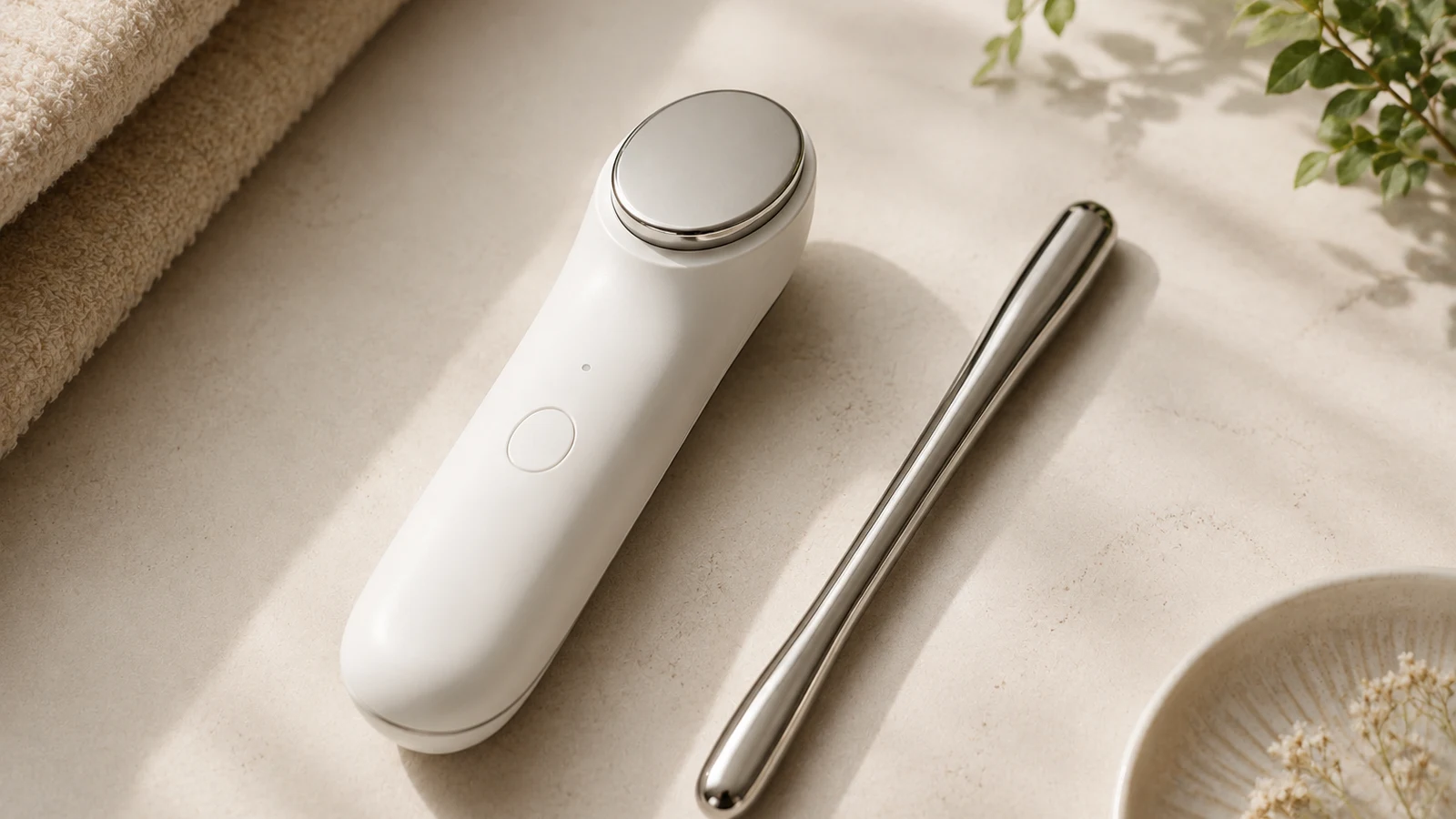
A student saved up for one of those sleek microcurrent gadgets, used it faithfully for a month, and then asked me whether she'd wasted her money learning bojin too. She hadn't, and the reason is the same reason people get this comparison wrong: they treat the two as rivals doing the same job. They run on completely different engines, and once you see that, the question stops being "which one wins" and becomes "which engine does my face need."
Two different engines
A microcurrent device runs on an electrical engine. It sends a tiny current through the skin, meant to stimulate the muscle underneath and, with regular use over time, encourage tone. You glide it over the face, it does its quiet electrical work, and the payoff builds across weeks of sessions. Bojin runs on a mechanical engine, which is just a warm, precise pair of hands or a stick. It doesn't signal the muscle to do anything. It releases the tension already held in the tissue and moves the fluid that's pooled, working by order, angle, and position.
A microcurrent device sends a signal to tone the muscle. Bojin releases tension and moves fluid by hand. One is trying to build something up over time; the other is easing something that's already there, today. Different engines, different jobs, not a contest, which is exactly why some women run both.
This is why "which is better for lifting" has no clean answer. If your face is tense, clenched, and puffy, an engine that adds more stimulation isn't what it's asking for; it wants release first. If your face feels slack and you like the ritual of a device building tone over weeks, the electrical engine fits. Neither engine is broken. They're built for different roads.
An honest word on both
Let me be even-handed. Microcurrent devices give many women a genuine, temporary more-lifted look on the day, and their results lean hard on consistent use over time, the same honesty that applies to any gentle approach: the effect fades and is maintained by keeping it up. Neither a device nor a pair of hands replaces a medical procedure, and honest makers of both say so. Anyone claiming either one erases years permanently has left honesty behind.
How to decide, in five questions
- Does your face feel tense and puffy, or slack? Tense and puffy leans toward release; slack-and-wanting-tone leans toward the device.
- Do you want to start tonight for free, or invest in a gadget? Bojin starts with fingertips or a stone you own; microcurrent is a device plus ongoing gel.
- Do you enjoy a tech ritual, or a hands-on one? Honestly, whether you'll keep it up matters more than the mechanism. The best tool is the one you actually use.
- Do you have a pacemaker or other electrical-medical device? Microcurrent isn't for everyone; check the device's guidance and your doctor. Bojin has no current involved.
- Do you want both? Then run them on separate days, so one tones while the other eases, never stacked on the same worked-up spot.
So did she waste her money?
No. She now has one tool that eases the tension her face holds by evening, and another that works on tone over the long run, and she uses them on different days for different reasons. That's not redundancy, that's a fuller toolkit. The mistake would have been buying the device believing it made the hands-on release pointless, or vice versa. Different engines. Keep the one, or both, that fit the road your face is actually on.
The gadget and the stick were never competing. They were two engines for two different jobs, and knowing which job your face needs tonight is worth more than owning either one.
Quick answers
Is bojin or microcurrent better for lifting?
They aim at different things, so neither is simply better. Microcurrent sends a small signal meant to tone the muscle over a course of regular use. Bojin releases the tension and fluid that make a face look tight and heavy. If your face feels tense and puffy, release fits; if you want gradual toning and enjoy a device, microcurrent fits. Some women use both, on different days.
Do microcurrent devices actually work?
They give many people a real, temporary more-lifted look on the day, and results depend heavily on using them consistently over time. Like any gentle approach, the effect fades and is maintained by keeping it up. They're not a substitute for a medical procedure, and honest brands say so.
Can I use both?
Yes, most people who do keep them on separate days rather than stacking them on the same worked-up area. A common rhythm is device sessions on some days and a gentle bojin release on others, so one is toning and the other is easing, not competing on the same tissue at the same time.
Which is cheaper to start?
Bojin, easily. You can begin with clean fingertips or a gua sha stone you already own and no electricity at all. A microcurrent device is an ongoing purchase, often with a gel you keep rebuying. Cost isn't the whole story, but if you want to try the release idea for free tonight, you can.
Try the release engine for free
Before you decide anything, feel what a hands-on release actually does. My free 3-minute video walks through the order, angle, and pressure, no device required.
Watch the free 3-min videoYu-Ting Lan is a Taiwan-based international bojin instructor and the founder of Héhé Studio. She has taught her bojin method to more than a thousand students, from complete beginners to grandmothers, across Taiwan, Hong Kong, and Malaysia.