The Bojin Journal · Myths & real talk
After Dental Work, Implants, or a Root Canal: How Long to Wait

A student wrote to me the day after her implant surgery, asking whether a gentle jaw release might help with the tightness she was feeling. I told her to put the stick down.
A Taiwan-based teacher on why your jaw aches after the dentist, why waiting is the answer, and the question to ask before restarting your routine. Remember: this is a gentle, supported self-care observation you can test on one side of your face—never a forceful press or medical treatment.
She'd asked the right question at the wrong moment, and the fact that she asked at all is why I want to write this properly. Dental work is common after 50, jaw tension is common after dental work, and the temptation to reach for something that usually helps is completely understandable.
Why your jaw is tight after the dentist
Even a routine filling means holding your mouth open, often for a long stretch, with your jaw pushed further than it goes in daily life. The muscle that closes your jaw ends up stretched and then sore, the same way any muscle does after being held at an unfamiliar length. That's why your jaw aches on the drive home from an appointment that had nothing to do with your jaw.
Longer procedures make it more pronounced. Implants, extractions, and root canals involve more time, more force, and often swelling in the tissue afterward. What you're feeling is real, and it's exactly the kind of thing gentle work usually eases. That's the trap.
Why waiting is the whole answer here
Here's the honest framing, and it's not complicated. Working over a site that's healing, swollen, stitched, or inflamed risks disturbing it, and none of the gentle, temporary benefits of bojin are worth a complication in your mouth.
Swelling at a healing dental site is deliberate repair. Pressing on it externally doesn't help that repair and can irritate it. Waiting costs you nothing.
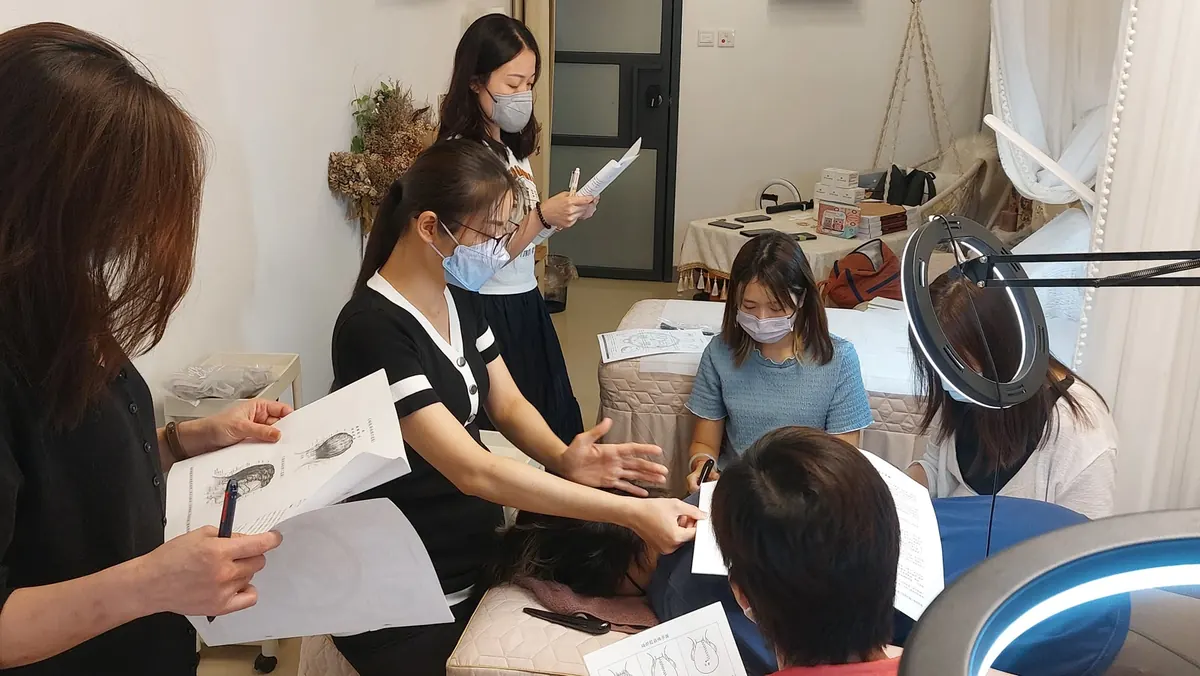
Swelling after a procedure is your body doing something on purpose, at a site it's actively repairing. That's different from the everyday puffiness a routine is designed for. Pressing on it externally doesn't help the repair and can irritate it.
There's also a reason bojin sits alongside dental care rather than substituting for it: a jaw that hurts after dental work has a specific cause your dentist knows about, and if something isn't healing normally, you want to find that out, not massage over it.
A general guide, and who actually decides
Your dentist or oral surgeon decides. Their instructions beat anything you read here, including this. What follows is only a rough shape of the conversation to have with them.
For a simple cleaning or a small filling with no soreness, there's usually nothing to wait for. For anything involving swelling, stitches, an extraction, an implant, or a root canal, most people are looking at a wait of at least one to two weeks before doing external work near that side of the jaw, and often longer for implants. When you do return, you start on the other side and stay well away from the site.
Ask your dentist this exact question: "When is it okay to do gentle external massage over this area?" They'll give you a real answer for your situation.
The 5 steps for coming back after dental work

Get the clearance first.
Ask your dentist before you restart anything near the treated side.
Start on the untreated side only.
Your usual routine, normal comfortable pressure, on the side that had nothing done.
Keep well clear of the site.
Not "gently over it." Away from it, including the area that's still tender.
Return to the treated side slowly.
Once cleared and no longer tender, warm the area first and use lighter pressure than usual for the first several sessions.
Finish down the neck, both sides.
Even when you're only working one side of the face, close the session normally.
Honest expectations, and a safety note
Waiting doesn't cost you anything. The gentle, temporary benefits of a routine are still there in two weeks, and consistency over months matters far more than the sessions you skip while healing.
If you've had anything more than a cleaning, ask your dentist first, and when in doubt, wait longer and work the other side.
Quick answers
How long should I wait after dental work before doing bojin?
Your dentist decides. As a rough shape, nothing to wait for after a simple cleaning; at least one to two weeks after swelling, stitches, extraction, implant, or root canal, often longer for implants.
Why does my jaw ache after a routine dental appointment?
Holding your mouth open stretches the muscle that closes your jaw beyond its everyday range, and it gets sore afterward like any muscle held at an unfamiliar length.
Can gentle massage help my jaw heal faster after an extraction?
No. Swelling at a healing site is deliberate repair, and pressing on it externally doesn't help and can irritate it. Stay well clear until cleared.
Can I work the other side of my face while healing?
Usually yes, once your dentist confirms. Work the untreated side normally, stay well away from the site, and still finish down the neck on both sides.
Want the safety basics in one place?
My free 3-minute video covers the everyday version of the routine, so you know exactly what you're returning to once you're cleared.
Watch the free 3-min videoYu-Ting Lan is a Taiwan-based international bojin instructor and the founder of Héhé Studio. She has taught her bojin method to more than a thousand students, from complete beginners to grandmothers, across Taiwan, Hong Kong, and Malaysia.