The Bojin Journal · Myths & real talk
Hot Flashes and a Flushed Face: Should You Work on It?

It arrives without warning. Heat climbing your chest and neck into your face, your cheeks going red, a film of sweat at your hairline, and the particular self-consciousness of it happening in a room full of people who can see.
A Taiwan-based teacher on why you should stop during a hot flash, what bojin genuinely cannot change, and the tension flashes leave behind. Remember: this is a gentle, supported self-care observation you can test on one side of your face—never a forceful press or medical treatment.
Students ask me whether their routine can help with this, and sometimes whether doing it during a flash might cool things down. The answer to the second question is no, and the answer to the first one is more interesting than a simple no.
What's actually happening in your face
A hot flash isn't your face's doing. It starts in the part of your brain that regulates body temperature, which during perimenopause and after becomes more sensitive to small changes. It decides you're overheating when you aren't, and it acts: blood vessels near the skin's surface open wide to dump heat, which is exactly why your face goes red and hot within seconds.
That flush is a temporary dilation of surface vessels. It resolves on its own, usually within a few minutes, once your body finishes its correction. Nothing you do on the outside of your face is driving it, and nothing you do on the outside will shorten it.
Why you shouldn't work on a flushing face
Here's the clear line. During a flash, the vessels near your skin's surface are already wide open and your skin is hot and often sweating. Adding friction, pressure, and warming passes to a face in that state pushes in the same direction the flash is already going. At best it feels unpleasant. At worst you'll leave marks on skin that's far more reactive than usual.
During a flash, surface vessels are already wide open. Adding friction and warmth pushes in the same direction the flash is going. Wait it out instead.
There's also a practical problem: sweat ruins your slip. A tool on damp, hot skin drags instead of glides, and dragging on reactive skin is exactly what we spend so much time teaching people to avoid.
So the instruction is simple, and it's the opposite of doing more: when a flash comes, stop. Sit down, let it pass, and come back to your face when your skin is back to its own temperature.
Where a routine does fit
Two places, both worth having.
The first is timing. Working your face when you're already cool and settled, rather than in the evening when flashes are often worse, means you're not fighting your own thermostat. Many women find a morning session works better than a bedtime one for exactly this reason.
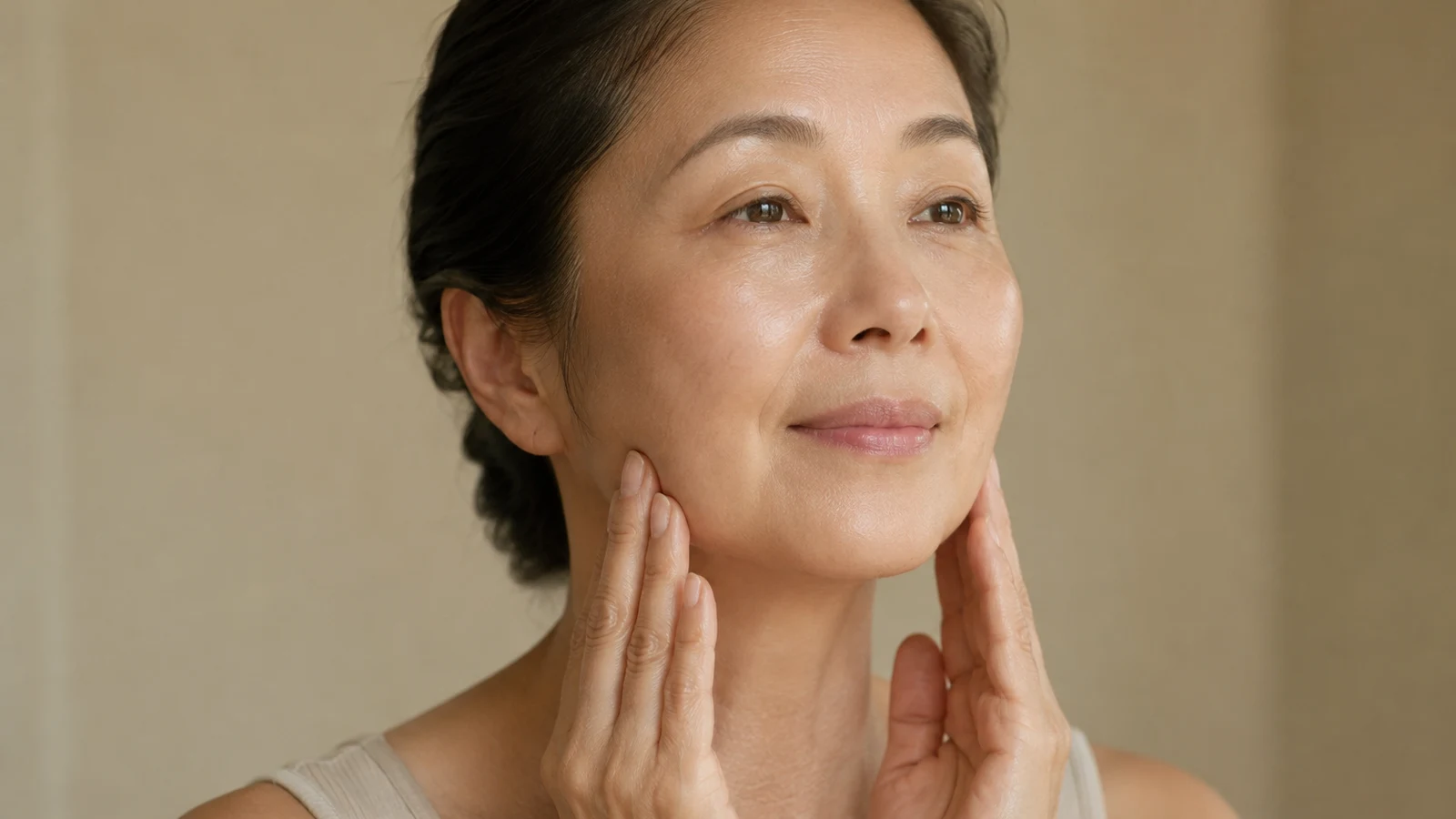
The second is the tension that flashes leave behind. A flash is stressful. You brace, you clench, you hold your shoulders up around your ears waiting for it to pass, and after months of that the jaw and brow carry a real tightness that has nothing to do with temperature. That tension is something gentle work genuinely reaches, on a face that isn't currently flushing.
The 5 steps, timed around flashes
Wait until your skin is at its own temperature.
Not during a flash, not in the ten minutes after one while you're still warm.
Work somewhere cool.
A cooler room, away from a hot bathroom right after a shower, so you're not being pushed toward the next one.
Warm gently, less than usual.
Reactive skin needs less warming to be ready, so keep passes shorter and lighter.
Ease the jaw and brow.
The bracing spots, where months of waiting out flashes collect. Comfortable pressure, nothing forced.
Finish down the neck and stop.
If you feel heat starting to build at any point, put the tool down and come back another time.
Honest expectations, and a safety note
Bojin does not reduce hot flashes, shorten them, or change their frequency. It cannot; they start in the brain's temperature regulation, not the skin. Anyone selling a facial tool as a menopause remedy is selling you something. What a routine can do is ease the tension that living with flashes creates, gently and temporarily.
When your face is hot, put the tool down. Everything your routine offers will still be there in twenty minutes.
Quick answers
Can bojin reduce hot flashes?
No. Hot flashes start in the brain's temperature regulation, not the skin, so nothing done on the face changes their frequency or length.
Should I do my routine during a hot flash?
No. Surface vessels are already wide open and skin is hot and often sweating, so friction and warming push in the same direction and can leave marks.
When is the best time to do my routine if I get flashes?
When your skin is at its own temperature, in a cool room. Many women find mornings work better than evenings, when flashes are often worse.
What can a routine actually help with here?
The jaw and brow tension that builds from months of bracing through flashes. That tension is real and separate from the flashes themselves.
Want the gentle version, guided?
My free 3-minute video shows the calm, unhurried pace worth using on a day your skin is already reactive.
Watch the free 3-min videoYu-Ting Lan is a Taiwan-based international bojin instructor and the founder of Héhé Studio. She has taught her bojin method to more than a thousand students, from complete beginners to grandmothers, across Taiwan, Hong Kong, and Malaysia.