The Bojin Journal · Brows & Forehead
Heavy, low brows making your eyes look smaller?
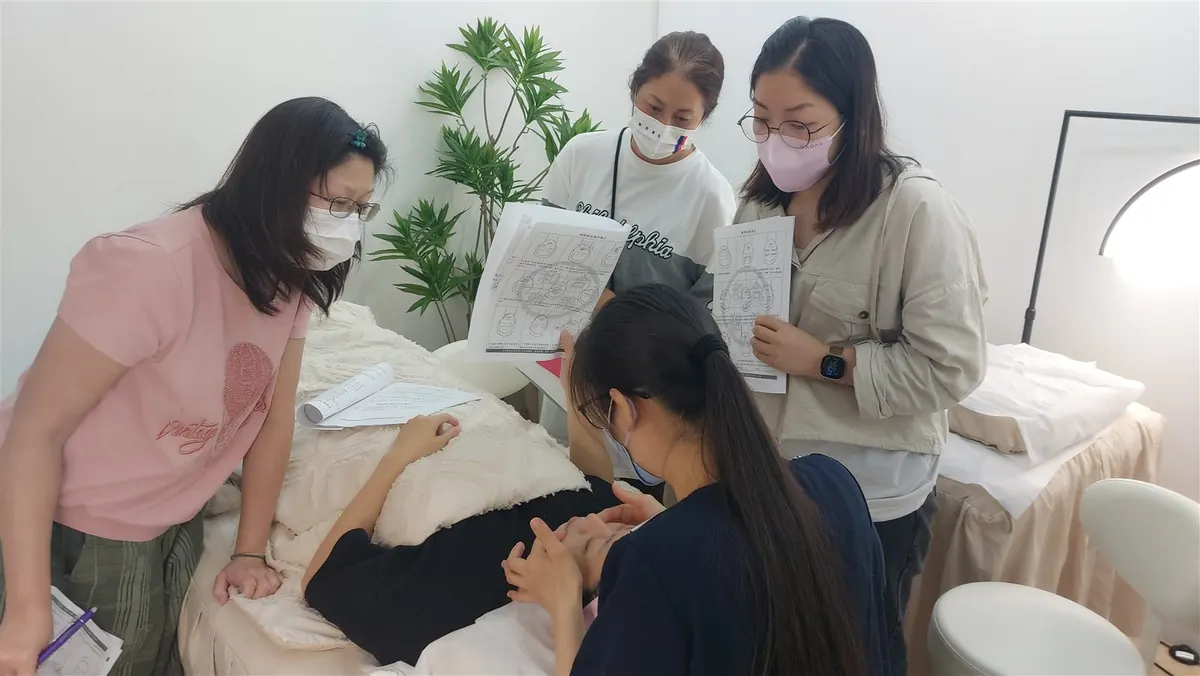
Your brows have settled lower, and it is not your imagination. Over the years the brow area loses a little of its natural spring, and the forehead holds so much quiet tension that it slowly weighs the brows down. That crowds the upper eyelid and reads as tired, even on a morning when you feel fine. The good news is that a lot of what makes brows feel heavy is tension you are holding, and tension is something a careful, well-placed method can help ease.
Why do my brows sit so low and heavy now?
Two things are usually happening at once. First, the forehead is one of the hardest-working areas on your whole face. You raise your brows to see, to concentrate, to react, hundreds of times a day, and that muscle stays a little clenched without you ever noticing. All that holding pulls on the brow and keeps it from resting where it used to.
Second, the brow area naturally loses a bit of its firmness and bounce with age, and fluid can settle above the eyes, especially in the morning. When the brow drifts lower, it presses closer to the lash line and the eye looks smaller and more hooded than it once did.
None of this is your fault, and it is not a sign you did anything wrong. It is ordinary, and women tell me all the time that they thought they were the only one watching their brows sink. You are not.
How the Bojin Method helps a heavy brow feel lighter
First, what bojin is. If you already know gua sha, you have a head start, because bojin grew from the same family of Chinese hands-on face care, so it will feel familiar. But it is its own, deliberate method. What makes it work is three things: the order you work in, the angle you hold the tool, and the exact spot you work.
The traditional tool is a bojin stick, a slim, polished stainless steel tool shaped to follow the curves of your face, and you use its rounded edge. You can start with clean fingertips or a smooth-edged tool you already own while you learn the moves, but the stick is what the method was built around. And the pressure is not the barely-there touch people assume, nor is it forceful. It is the right, comfortable pressure for you, firm enough to be felt, never enough to hurt or drag your skin.
So much of a heavy brow is tension the forehead is holding. When you release that forehead and work the brow bone in the right order, at the right angle, the whole area can feel lighter and look a little more open. Most of us were once handed a tool with no method attached, no one showing us where to begin or how to hold it, and the same few minutes feel different once you add that.
Around your brows, comfortable pressure matters more than pressing harder or barely touching. Held at the right angle, worked in the right order and place, that order, angle, and placement is the method.
The 5-minute brow and forehead reset
Use the rounded edge of your bojin stick, or clean fingertips while you learn. Add a little oil or cream first so nothing drags on the skin. Work in order, follow the angle of the bone and muscle, and use the right comfortable pressure, firm enough to feel but never enough to tug. Give it five slow minutes rather than a fast, forceful minute.
- Warm and settle the forehead Rest the flat of your fingers or the stick against your brow and breathe slowly for a few seconds. Let the forehead muscle unclench before you do anything else.
- Read your face first Notice which side feels tighter or sits lower, and start there. Reading your face is what sets the order you follow, so you spend your minutes where they are needed most.
- Ease the forehead upward With the rounded edge, glide from the brows up toward the hairline in slow, even passes. Keep the angle gentle against the skin and the pressure comfortable, coaxing the held tension to let go.
- Follow the brow bone outward Set the rounded edge just under the brow along the bone and glide from the inner brow outward toward the temple. Keep the angle low against the bone so you feel it work without pressing into the eye.
- Finish down the sides of the neck This is the step people skip. Sweep gently down the sides of your neck a few times so any fluid you moved has a clear path to drain away, leaving the area looking less puffy.
What can I expect?
Done regularly, most women notice the brow area feels lighter and less tight, looks a little more open and rested, and reads a touch more lifted in the mirror, especially first thing in the morning. It can help you feel calmer, and it is a nice moment of care that gives a small lift of confidence when you catch your reflection. It can also help a serum sink in afterward.
Now the honest limits. This is gentle self-care, not medical care, and it is not a brow lift. It will not change your anatomy, it will not smooth out lines, and it cannot hold up a brow that has naturally settled with age. The results are gentle and everyday, and they fade if you stop. If a brow drops suddenly, sits low on only one side, or comes with pain, drooping, or changes in vision, please see your doctor rather than reaching for a face tool.
Give the brow area a calm five minutes and let the method, not force, do the work.
Quick answers
Can bojin lift my brows?
Not the way a cosmetic procedure would. Bojin cannot change your anatomy or give you a true brow lift. What it can do is help release the forehead and brow tension you are holding, so the area feels lighter and looks a little more open and rested. Those results are gentle and everyday, and they fade if you stop.
How often should I do the brow reset?
A few minutes most days is plenty, and short and regular beats long and forceful. Many women fold it into their morning or evening routine while their serum or cream is on. If your skin feels irritated, take a day off.
Can I use a gua sha stone, or do I need a bojin stick?
You can start with a smooth gua sha stone or clean fingertips while you learn the moves. A bojin stick is the traditional tool, shaped to follow the face, and it is what the method was built around. But the real difference is not the object in your hand. It is working in the right order, at the right angle and spot, with a comfortable pressure.
Why do my brows look lower in the morning?
Fluid tends to settle above the eyes overnight, and the forehead often wakes up tight, so brows can look heavier first thing. A slow reset that finishes down the sides of the neck gives that fluid a path to move, which is why the area can look a little less puffy and more awake afterward.
See the order, angle, and spot for yourself
Watch the free 3-minute video and I will show you exactly where to begin on your brows and forehead, the angle to hold, and the spot to work, so you can feel the right comfortable pressure in your own hands.
Watch the free 3-min videoYu-Ting Lan is a Taiwan-based international bojin instructor and the founder of Héhé Studio. She has taught her bojin method to more than a thousand students, from complete beginners to grandmothers, across Taiwan, Hong Kong, and Malaysia.