The Bojin Journal · Eyes
Dark circles that won't fade even after a full night's sleep?
If your dark circles are still there after eight solid hours, sleep was never the only cause. The skin under your eyes is the thinnest on your whole face, so it shows whatever sits underneath it: small blood vessels, a little natural pigment, and the shadow cast when the area hollows slightly with age. For a lot of us it also runs in the family. None of that means you slept wrong or did anything wrong. It means circles are rarely a simple tiredness problem, and the eye area responds to a careful, well-placed method far more than to random rubbing.
Why are my dark circles still there after a good night's sleep?
Because much of what you're seeing isn't about sleep at all. The skin around your eyes is remarkably thin and delicate, and thin skin is a little see-through. It shows the fine web of vessels and the natural color that live beneath the surface, which is why the area can look darker or bluish even on a well-rested morning.
Two other things add to it. Over time, and often more noticeably around menopause, the area can lose a little of its cushion and hollow slightly, and that dip catches shadow. Part of what looks like a dark circle is a shadow. On top of that, fluid can settle and linger there overnight, and a bit of puffiness deepens the shadow even more.
And sometimes it's your genes. If your mother and grandmother had circles, you may carry a little more pigment in that spot naturally. That's not a flaw and it's not your fault. It's skin being honest about what's underneath.
How can the Bojin Method help the eye area look brighter?
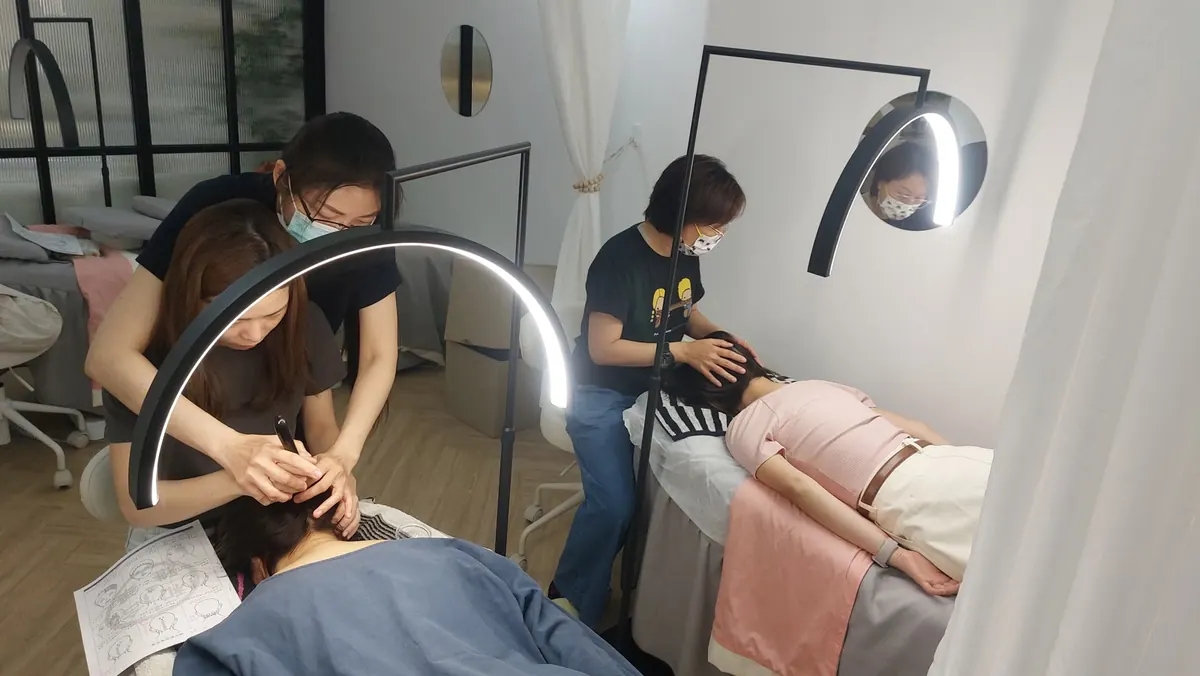
First, what bojin is. If you already know gua sha, you have a head start: bojin grew from the same family of Chinese hands-on face care, so it will feel familiar. It's still its own deliberate method. What makes it work is three things: the order you work in, the angle you hold the tool, and the exact spot you're working. Around the eyes, it begins by reading your own face first: noticing where you feel puffy, tight, or a little congested before you touch anything.
The traditional tool is a bojin stick: a slim, polished stainless steel tool shaped to follow the lines of your face. You can start with clean fingertips while you learn the moves, but the stick is what the method was built around. And the pressure is not the barely-there touch people assume, nor is it forceful. It's the right, comfortable pressure for you: enough to be felt, never enough to hurt or drag this delicate skin. Get the order, angle, and placement right at that comfortable pressure, and you gently encourage the fluid that pooled overnight to move along.
If gua sha here never seemed to do much for you, it almost certainly wasn't your fault. Most of us were handed a tool with no method attached: no one showed us the order to follow, the angle to hold, or the exact place to work. Add that method, and the same few minutes feel different.
Around your eyes, comfortable pressure matters more than pressing hard or barely touching. The right pressure, held at the right angle and worked in the right order and place, is what moves the fluid on and softens the shadow. That order, angle, and placement is the method.
The 5-minute brightening eye reset
You'll want a bojin stick if you have one, or clean fingertips while you're learning. Add a drop of your eye oil or cream first so nothing drags across this delicate skin. Work in order, follow the angle of the bone, and use the right comfortable pressure: firm enough to feel, never enough to tug. If you ever feel the skin pulling, pause: add a little more cream, check your angle, and settle back to a pressure that feels comfortable.
- Warm and settle. Rub your palms together, cup them gently over your closed eyes, and take three slow breaths. This softens the whole area and lets you arrive before you begin.
- Read your face first. With your eyes open, notice what you see and feel today: where it looks puffiest, where a shadow sits, where you feel tight. Let that guide the order you work in.
- Sweep under the eye. With the rounded edge of your bojin stick or a fingertip, glide from the inner corner outward along the socket bone, staying right below the eye. Keep the angle low against the bone and the pressure comfortable: three or four passes on each side.
- Ease the inner corners and brow. Work small, careful strokes along the inner corners and right under the brow bone, where fluid and tension like to gather. Keep to the bone, follow the same order each time, and never dig in.
- Finish down the neck. Sweep from right below the ears down the sides of your neck toward your collarbones a few times. This is the step people skip, and it's what gives the fluid you moved a clear path to drain away.
What can I expect?
Done with the right method most mornings, this can help the under-eye area look less puffy, a little brighter, and more rested, and it tends to help your eye cream absorb better. Many women tell me the mirror feels a little kinder in the morning, and that small lift in confidence is real and worth having.
Now the honest part. Even the best method can't change pigment you were born with, can't change your bone structure or the natural hollowing underneath, and won't make a circle that comes from genetics disappear. What it can do is ease the fluid and puffiness that deepen the shadow, so the area looks fresher, not different. This is a soothing self-care ritual, not a treatment. And if a dark circle appears suddenly, sits on only one side, or comes with pain, swelling, or vision changes, please mention it to your doctor rather than massaging it.
Circles are one of the most common things women ask me about, and one of the most misunderstood. Once you understand what's casting that shadow, and that the fix is method, not force, you can stop fighting your face and start working with it, a few honest minutes at a time.
Quick answers
Will this make my dark circles disappear for good?
No, and it's honest to say so. If your circles come from natural pigment, genetics, or the hollowing underneath, no home method can change those. What it can do is ease the fluid and puffiness that deepen the shadow, so the area often looks brighter and more rested. It's a soothing ritual, not a treatment.
Can I use a gua sha stone, or do I need a bojin stick?
You can start with a gua sha stone or clean fingertips while you learn: the moves matter more than the tool at first. A bojin stick is the traditional tool, shaped to follow the face and hold the right angle, and it's what the method was built around, so it's worth adding later. Either way, the real difference isn't the object in your hand; it's working in the right order, at the right angle and spot, with a comfortable pressure.
Why do I have dark circles even though I sleep well?
Because sleep is only one small part of it. The skin under your eyes is very thin and shows the vessels and pigment underneath, and a slight hollowing with age casts a shadow that has nothing to do with rest. Good sleep helps puffiness, but it can't change the skin's thinness or your genes.
How long until I see any difference?
Results vary from person to person, and there are no guarantees. Some women notice the area looks a little fresher and less puffy the same morning, while for others it's a gradual thing with regular practice. Think everyday brightness, not a dramatic before-and-after.
Want to see the method for yourself?
I've put the whole brightening eye reset into a free 3-minute video, so you can see the order, the angle, and exactly where to work, and feel the right pressure for yourself. It's the method to add to whatever tool you're holding.
Watch the free 3-min videoYu-Ting Lan is a Taiwan-based international bojin instructor and the founder of Héhé Studio. She has taught her bojin method to more than a thousand students, from complete beginners to grandmothers, across Taiwan, Hong Kong, and Malaysia.