The Bojin Journal · The method
Gua sha and bojin: the tool and the technique, and how they fit together
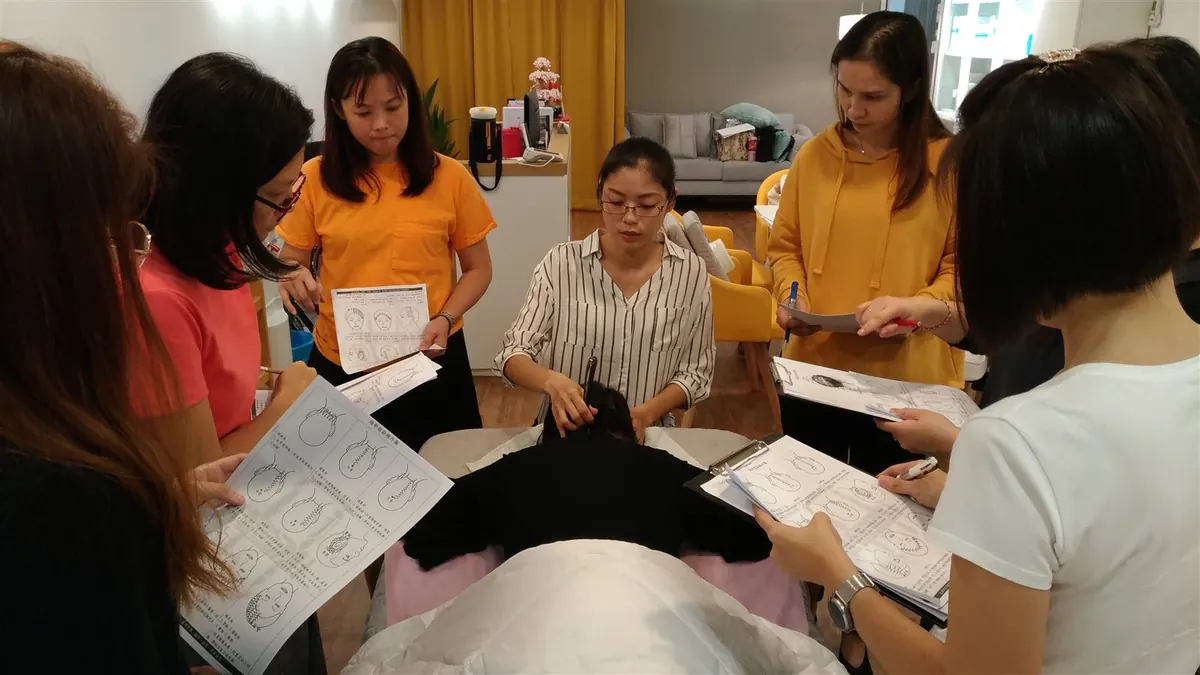
If you already own a gua sha stone and you're wondering where bojin fits, the answer is simple: they come from the same family of Chinese hands-on face care, so bojin will feel familiar right away. Bojin adds a method to whatever tool is already in your hand, not a different stone to buy. Keep your gua sha. You can learn with it.
So what's the difference between gua sha and bojin?
Gua sha is often the tool many women already have in a drawer. Bojin is the technique. One names the object in your hand. The other names the way you use it. That is why the two often get lumped together and talked about as if they were interchangeable when they are not quite the same thing.
Your face isn't a flat surface. It's built over bone, with soft places where fluid gathers and firmer places where muscle sits and holds tension through a long day. That is part of why method matters here. Once you stop thinking of the face as one smooth canvas, the need for order, angle, and placement makes more sense.
Bojin is that plan. It grew from the same tradition you already know. It is still its own, more deliberate practice. What makes it distinct is three things: the order you work in, the angle you hold the tool, and the exact spot you're working.
How the Bojin Method uses the tool and the technique together
The method rests on three choices you make each time. Sequence is the order you move through your face, so fluid has somewhere to go instead of shifting side to side. Angle is how you hold the tool against the shape of the bone, so it follows your face instead of dragging across it. Position is the exact place you work, the spots that hold tension or collect puffiness. Hold those three at a comfortable pressure and a few minutes feel different.
The dedicated tool the method was built around is a bojin stick, a slim, polished tool shaped to follow the curves and edges of the face. That said, you do not need to buy anything to understand the comparison. Clean fingertips work, and so does the gua sha stone you already own. The point here is not which object wins. It is how the method changes what the object is doing.
Pressure here is only the foundation, and it's easy to get right once you stop guessing. Comfortable pressure matters more than the barely-there touch people assume or a forceful press. The right pressure is firm enough to be felt and never enough to hurt or drag the skin. Let the angle and the order do the work. Your hand carries them.
Gua sha can be the tool. Bojin is the method that guides it: the right, comfortable pressure held at the right angle, worked in the right order and in the right place. That is the distinction this page is here to clarify.
A simple 5-step routine to let the tool and technique work together
Use your bojin stick or your fingertips, or the gua sha stone you already have. First put on a little oil or cream so nothing drags or tugs. Then remember the whole point: work in order, follow the angle of the bone, and use the right comfortable pressure, not featherlight and not forceful. The routine looks like this.
- Warm and settle first Rest the tool flat against one cheek and take a few slow breaths. Let your shoulders drop. This isn't wasted time. It warms the skin, settles you, and helps everything that follows feel smoother.
- Read your face before you start Press lightly around your jaw, cheeks, and brow and notice where it feels tight or full today. That quick check sets your order for the day, so you begin where your face is holding tension rather than by habit.
- Work the cheeks along the bone Set the tool at a low angle just under the cheekbone and glide outward toward your ear, following the edge of the bone. This is a spot that collects puffiness. Repeat a few passes at a comfortable pressure, letting the angle guide you.
- Ease the jaw and brow Move to the jawline, holding the tool to the shape of the bone and working from the chin back toward the ear. Then take small, patient passes across the brow, where tension builds. Follow the order; don't rush between zones.
- Finish light down the sides of the neck This is the step people skip, and it matters most. With very light passes, sweep down the sides of your neck toward the collarbone so fluid has somewhere to go. Skip it and puffiness has nowhere to go.
What can I expect?
Most women notice small, real things first. Your face can feel less tight, look a little less puffy, and seem brighter and more rested, especially in the morning or after a long day. A few quiet minutes can leave you calmer and more at ease in your own skin. Done before your serum, the method can help it absorb, and over weeks of showing up, your face may look more relaxed and a touch more lifted.
Now the honest part. This is a gentle self-care ritual, not medical care. It isn't going to change deep lines, under-eye puffiness, or the years on your face, and no method at home can. What it can do is help you look and feel a little brighter and less tired in the moment. And a plain safety note: anything sudden, one-sided, painful, or swollen isn't a self-care question. Please see your doctor about it.
You already have most of what you need. Keep your gua sha stone if you have one, understand the method it can carry, and then decide how you want to practice.
Quick answers
Do I have to throw out my gua sha and buy a bojin stick?
Not at all. Keep your gua sha stone and learn with it or with clean fingertips. A bojin stick, the slim polished stainless steel tool the method was built around, is worth trying later, but the method matters more than the tool. The same few minutes feel different once you add the order, angle, and spot.
Is bojin gua sha done differently?
They come from the same family of Chinese hands-on face care, so they feel related. Bojin is its own, more deliberate practice built around three things: the order you work in, the angle you hold the tool, and the exact spot. It's a method you can apply to whatever smooth tool is in your hand.
Can gua sha and bojin be used together?
Yes. Many women already own a gua sha stone and use it as the tool while learning the bojin method. The useful distinction is not one replacing the other, but understanding when you are talking about the object in your hand and when you are talking about the method guiding it.
What if my gua sha routine still feels ineffective?
That is usually a troubleshooting question, not a comparison question. If your routine feels ineffective even though you are doing it regularly, start with why gua sha may not be giving you results.
See the order, angle, and spot in 3 minutes
Reading about sequence, angle, and position only takes you so far. Watch the free 3-minute video and I'll show you exactly where to place the tool, how to hold the angle, and the order to follow, so you can try it today with the stone you already own.
Watch the free 3-min videoYu-Ting Lan is a Taiwan-based international bojin instructor and the founder of Héhé Studio. She has taught her bojin method to more than a thousand students, from complete beginners to grandmothers, across Taiwan, Hong Kong, and Malaysia.